

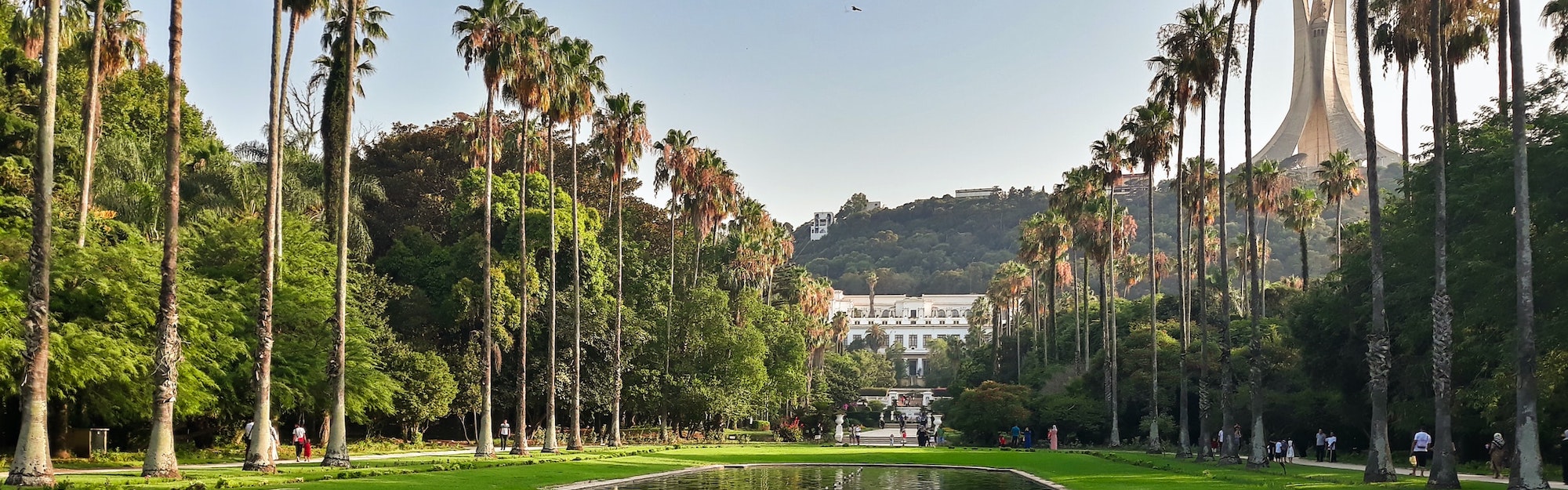

Algiers Travel Guide
Just a short, three-hour flight from London, Algiers is a captivating Mediterranean port where ancient streets meet vibrant culture and sunlit shores. A great place to start exploring is the Casbah, the city's ancient UNESCO World Heritage quarter. It's home to the Djamaa el Kebir (Great Mosque), which dates back to 1097 and is the oldest mosque in Algiers.
Another must-see is the Notre Dame d'Afrique, a 19th-century basilica perched on a hill and reachable by cable car, offering spectacular views over the bay. The city also boasts excellent cultural sights, including the National Museum of Fine Arts, the Bardo Museum, the National Museum of Antiquities and Islamic Arts, and the Central Military Museum.
For sunshine and relaxation, families can head to Aquafortland, a large water park with pools, slides, spa and leisure facilities. Along the coast west of the city, seaside resorts such as Sidi Fredj, Palm Beach, Douaouda and the Club of the Pines provide charming beaches and resort-style amenities.
Getting Around
Metered, licensed taxis are a common way to get around Algiers and can be hailed from the street or found at taxi stands. Ride-hailing apps such as Yassir are also widely used. Municipal buses and trams operate throughout the city, though they're less popular with visitors.
The Metro, opened in 2011, has 19 stations and is a fast and reliable option. Commuter trains run to suburban areas and the airport, while a network of aerial cable cars connects some hilltop neighbourhoods, offering scenic views and avoiding traffic.
Car hire is available from the airport and major hotels, but driving can be challenging due to local road conditions. Central Algiers is walkable, and the historic Casbah is largely pedestrian-only. A sturdy vehicle is recommended for travel beyond the city.
Public ferries also connect Algiers to key coastal towns including Oran, Bejaia, Annaba, and Ghazaouet.
Algiers Climate and Weather
Algiers experiences a hot-summer Mediterranean climate, with hot, dry summers and mild, relatively wet winters. Sirocco winds, carrying heat and dust from the Sahara, can occasionally intensify the summer heat.
In the summer months (June to August), average daytime highs typically range from about 84°F (29°C) and can occasionally exceed 90°F (32°C). During the cooler season (December to March), nighttime lows usually fall between 44°F and 49°F (7°C to 9°C).
The most comfortable times to visit are generally spring (April and May) and autumn (September and October), when temperatures are milder and rainfall is limited.
Algeria travel info
Electricity
The electrical current in Algeria is 230 volts, 50Hz. European two-pin and Schuko plugs are standard.
Language
Arabic and Berber are the official languages in Algeria. The most widely spoken foreign language is French, followed by English.
Money
The unit of currency is the Algerian dinar (DZD), nominally divided into centimes, though centimes are no longer in everyday use. Algeria remains largely cash-based. While ATMs and international card acceptance are available in major cities and upscale hotels, availability and reliability are often inconsistent; many ATMs may refuse foreign cards or be out of service. Currency can generally be exchanged at banks, authorised bureaux de change, and some larger hotels. Visitors should always use official exchange services and avoid informal markets.
Tipping
Tipping in Algeria is not obligatory, but if patrons have received particularly good service, especially in cafés or nicer restaurants, a 10 percent tip is often appreciated. Some upscale places may include a service charge in the bill, so patrons may wish to check first.
Health
Travellers arriving in Algeria from countries where yellow fever is present, or who have spent more than 12 hours in an airport in one of those countries, are required to show proof of vaccination. Those with respiratory conditions may want to take extra care, as dust and sandstorms can occur. Tap water is generally not considered safe to drink, so bottled or properly treated water is recommended. Staying well hydrated is important, especially in hot weather where there's a risk of heat-related illness. While healthcare services may not match the standards some visitors are used to, private hospitals and clinics in cities such as Algiers and Oran are usually adequate. Comprehensive travel insurance is advised, particularly one that includes cover for medical treatment and evacuation if needed.
Safety
Most visits to Algeria are uneventful, and visitors generally encounter few problems. That said, petty crime such as pickpocketing and theft can occur, particularly in some areas of larger cities. Travellers are advised to avoid the more remote southern and eastern border regions, especially those near Libya, Mali, and Niger, where there's a higher risk of insecurity. Overland travel in these areas is not recommended. While major cities are typically calm, it's sensible to steer clear of large gatherings or demonstrations, which can be unpredictable.
Local customs
Greetings and hospitality are important in Algeria. Men should wait for women to offer a handshake, and if unsure, a polite hello or nod is appropriate. During Ramadan, it's respectful to avoid eating, drinking or smoking in public, and public consumption of alcohol is generally discouraged. Women are advised to dress modestly, particularly in more traditional or rural areas. It's important to be aware that homosexual activity is illegal and can result in criminal penalties. When taking photos, travellers should avoid capturing military or police personnel and sensitive locations to avoid any potential problems.
Doing business
Pleasantries are an important part of business interactions in Algeria. It's customary to avoid releasing a handshake too quickly and to inquire about health and family before discussing business. Physical closeness during conversations expresses warmth and familiarity. Business cards are commonly exchanged, and it's helpful to have them translated into French and, if possible, Arabic.
Duty free
Travellers over the age of 17 do not pay duty on 200 cigarettes, 50 cigars or 250g of tobacco. The same applies for 250ml of eau de toilette, 50ml of perfume in opened bottles and one litre of alcoholic beverages per person. Narcotics and gold are prohibited.
Communications
The international dialing code for Algeria is +213. WiFi is commonly available in hotels and restaurants, while travellers can easily purchase local prepaid SIM cards for unlocked phones from various providers.
Passport & Visa
Passports must be valid for at least six months beyond the date of entry into Algeria. Most travellers require a visa, though those in transit for less than 24 hours who remain within the international airport area typically do not. A transit visa, valid for up to seven days, must be arranged in advance through an Algerian embassy or consulate. Visitors may also be asked to show return or onward tickets, proof of accommodation, and evidence of sufficient funds for their stay. Travellers arriving from countries with a risk of yellow fever must carry a valid vaccination certificate.
Entry requirements
US nationals require a passport valid for at least six months from the arrival date. Visa required.
UK nationals require a passport valid for at least six months from the arrival date. Visa required.
Canadian nationals require a passport valid for at least six months from the arrival date. Visa required.
Australian nationals require a passport valid for at least six months from the arrival date. Visa required.
South African nationals require a passport valid for at least six months from the arrival date. Visa required.
Irish nationals require a passport valid for at least six months from the arrival date. Visa required.
New Zealand nationals require a passport valid for at least six months from the arrival date. Visa required.
Useful contacts
National Tourist Office, Algiers: +213 21 43 8060
14 (Ambulance and Fire Services), 1548 (Police).