


Belize City Travel Guide
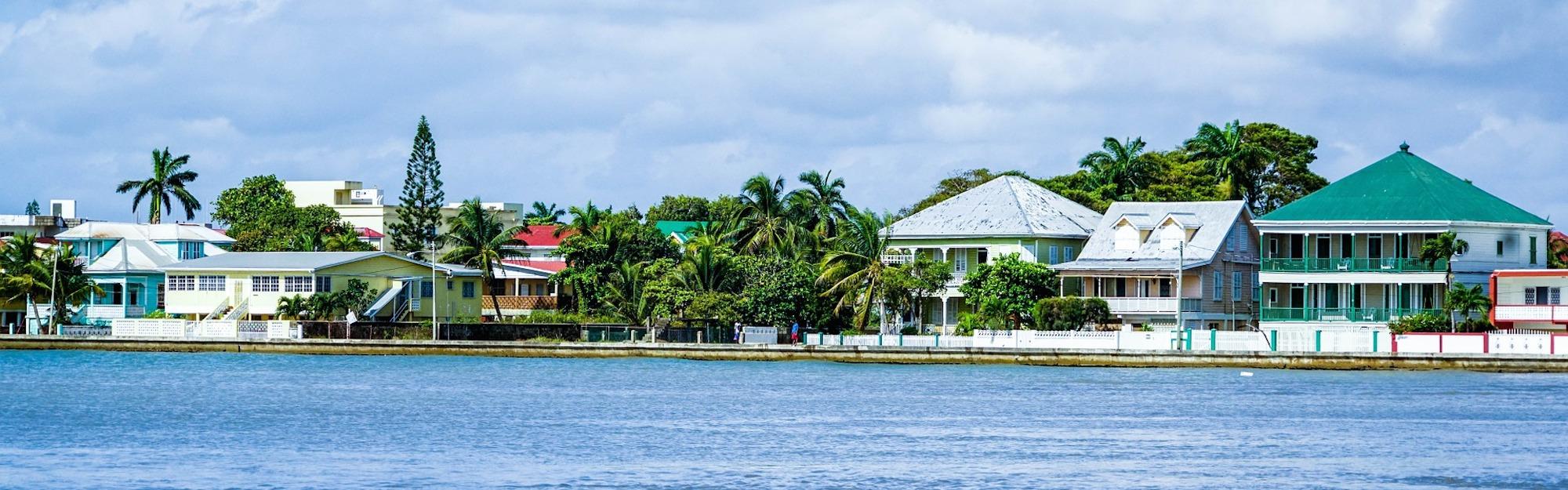
For most travellers, Belize City is the first stop in the country, whether they arrive by air or come in on a cruise ship. It's the largest urban centre in Belize and the main gateway to the cayes, the reef and the interior, though it isn't the country's main attraction in its own right. Even so, the city has a lived-in, distinctly Belizean character, shaped by its waterfront setting and long, layered history.
Belize City sits at the mouth of the Belize River, stretched along Haulover Creek in a low-lying area once covered in mangroves. Its layout is a blend of narrow streets, older wooden houses, neighbourhood shops and a scattering of modern buildings, forming a patchwork that reflects both its past and its gradual evolution. Some areas feel worn, others quietly graceful, and together they create a mix that can be unexpectedly appealing to visitors who take the time to look.
The city's roots run deep. It grew from early British Baymen settlements and later became the centre of colonial administration. Over the centuries it endured fires, storms, epidemics and, most significantly, Hurricane Hattie in 1961, which ultimately prompted the relocation of the capital to Belmopan. Despite these setbacks, Belize City remained the country's cultural and commercial hub, carrying forward a sense of resilience that is still evident today.
Cruise passengers usually arrive at the Belize Tourism Village, which acts as a convenient base for excursions into the interior or out toward the reef. Independent travellers also tend to pass through the city, and there are a few worthwhile sights for those with a day or two to spare. The hand-cranked Swing Bridge is one of the city's most recognisable landmarks. St John's Cathedral, built from bricks once used as ballast on sailing ships, offers a quiet glimpse into the region's past. The Museum of Belize provides insight into Maya artefacts and colonial history, while the Bliss Centre has gallery space and cultural performances along the waterfront.
Belize City may not be the highlight of most itineraries, but it has its own rhythm and warmth. Visitors often catch small, memorable moments of everyday life, such as fishing boats moving along the creek, students walking home from school, cafés opening their shutters, before continuing on to the beaches, forests and islands that define the rest of the country.
Mayflower Bocawina National Park
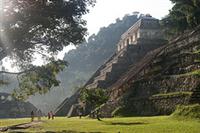
Mayflower Bocawina is a small, beautiful park near the village of Hopkins, a great base from which to explore. The jungle and mountains reveal walking trails, swimming holes and some interesting Mayan sites such as the pyramids of Mayflower Maya, and the unexcavated Maintzunun temple mound. There are some spectacular hiking trails, far less busy than the more popular Cockscomb National Park. Visitors can see plenty of bird life, troops of black howler monkeys, and enjoy stunning views from the top of Antelope Falls.
Mayan Ruins
Travellers to the central lowlands of Belize can visit the fascinating ruins of ancient Mayan cities, which date back more than 2,000 years. The region's lush, steamy tropical jungle is an other-worldly setting in which to view the Ruins, which themselves offer astonishing insights into one of the most revered of all ancient cultures. Modern-day Belize contains (among others) the sites of Caracol, Cerros, and Cahal Pech. The ruins at Altun Ha are popular due to their easy distance from Belize City. Lamanai, located in Northern Belize, is the site of some especially picturesque and interesting pyramids, as well as an ancient ball court and other structures. Other popular sites include Tikal, El Pilar, and Xunantunich.
Glover's Reef Atoll
Glover's Reef Atoll is one of only four atolls (ring-shaped reefs made of coral) in the western hemisphere, and a truly mesmerising place to visit. The partially submerged coral island, which is also a marine reserve, is 20 miles (about 32km) long, and is home to the richest variety of sea life in the Caribbean. The atoll is ringed with white sand beaches, dotted with coconut trees, and its interior lagoon boasts more than 800 coral patches, with pinnacles rising above the water's surface. While Middle Caye and North Caye are uninhabited, there are luxury resorts along Southwest, Northwest, and Long Cayes. Active types can spend all day diving, swimming, snorkelling, and fishing in the turquoise-blue water.
Cockscomb Basin Wildlife Sanctuary
One of Belize's largest protected areas, Cockscomb is home to the world's first jaguar sanctuary, dating back to 1984. The park also has a large diversity of fauna and flora, and hosts around 50 jaguars. These are famously shy cats, but the visitors' book at the entrance to the park suggests they are occasionally seen. The park is also has pumas, tapirs, anteaters, and armadillos, the jaguar's favourite food. Visitors may see, but will certainly hear, the family of black howler monkeys that live near the visitors centre.
Belize Zoo
Belize Zoo has an interesting history. It was the scene of a wildlife documentary that was filmed in the 1980s. On finishing the filming it was discovered that the animals were party tame, so the zoo was started on site. The bizarre occupants include tapirs, gibnuts, coatimundi, scarlet macaws, white-lipped peccaries, pumas and many more. Nighttime visits are advised, as many of the animals are nocturnal. Most of the animals are rescue cases and attempts are made to return them to the wild if possible. The zoo is unique in that animals from the surrounding forest can and do visit their friends on the inside.
Belize travel info
Electricity
Electricity runs at 110 or 220 volts and 60 Hz. Outlets usually take Type A, B, or G plugs.
Language
English is the official language and the one most commonly spoken, but visitors will hear Creole, Spanish, Garifuna and Mayan as well.
Money
The currency in Belize is the Belize Dollar (BZD), which is fixed at 2 BZD to 1 US Dollar. Many resorts, hotels, restaurants, and tour operators accept U.S. dollars, although smaller shops, local markets, and rural areas often require payment in Belize Dollars, and change is usually given in local currency. Credit and debit cards are accepted in larger businesses, and ATMs are available in most towns and tourist areas, dispensing Belize Dollars. Mobile payment options such as Google Pay and Apple Pay work in some hotels, shops, and tourist-oriented businesses, but they are not accepted everywhere, so travellers should also carry a physical card and some cash.
Tipping
Tipping in Belize is optional, but people do appreciate it. In restaurants, most visitors leave about 10 to 15 percent if a service charge isn't already on the bill. Some hotels include a service charge, so it helps to check the receipt and then decide whether to tip porters or housekeeping separately. Tour guides are usually happy to receive a tip for good service. Taxi drivers don't always expect one, but rounding up or giving a little extra is a nice touch, especially if they help with bags.
Health
Travellers to Belize generally don't need special vaccinations unless they are coming from a yellow-fever risk country, where a certificate may be required. It's sensible for them to make sure their routine vaccines are current. Mosquito-borne illnesses such as dengue, Zika and chikungunya are present, and dengue has been increasing, so using insect repellent and avoiding bites is important. Malaria exists in some rural areas, and a travel-health clinic can advise on the right precautions.
Tap water is treated in many towns, although quality can vary. On the islands and in more remote places, bottled or boiled water is the safer choice. Medical care is limited, and serious problems often need evacuation, so good travel insurance matters. Divers will find a hyperbaric chamber on Ambergris Caye.
Safety
Most visitors to Belize have a smooth and enjoyable trip, especially when they spend time in the main tourist areas. Violent crime is largely confined to certain neighbourhoods in Belize City, which are not places travellers usually visit. In the popular destinations, issues are generally limited to occasional petty theft.
Travellers can keep risks low by taking simple precautions such as keeping valuables out of sight, avoiding dark or isolated areas at night, staying with friends when possible, and choosing licensed guides for trips into remote or unfamiliar places. With a little awareness, most people find Belize a relaxed, welcoming and memorable destination.
Local customs
Belize has an easy-going social atmosphere, and visitors who approach people in a warm and relaxed way are usually met with the same spirit. The country is generally polite and non-confrontational, though social attitudes can be traditional in some areas. Dedicated gay venues are not common, and public displays of affection are fairly reserved across the culture, no matter the couple. LGBTQ+ visitors who keep things discreet tend to feel comfortable, especially in the main tourist areas, where people are used to meeting travellers from many backgrounds.
Doing business
Belize's business culture is generally relaxed, and visitors will find most interactions friendly and informal. Punctuality and good manners are appreciated, and meetings usually begin with a handshake, an exchange of business cards and a little small talk before moving on to the main discussion. Dress is typically neat but casual, with men often wearing short-sleeved collared shirts. Government offices and official appointments tend to be more formal, so smarter clothing may be expected. Standard business hours run from 8am to midday, then from 1pm to 5pm, from Monday to Friday.
Duty free
Belize allows travellers to bring in small amounts of tobacco, alcohol and personal items for their own use, but exact duty-free limits are not always clearly published. It's safest to keep quantities modest and declare anything uncertain. Restrictions apply to items such as plants, meat, animal products and some processed foods. Visitors who are unsure should check the latest guidance from Belize Customs and declare goods that might fall into a controlled category.
Communications
The international dialling code for Belize is +501. To call abroad from Belize, callers dial 00 followed by the relevant country code, such as 0044 for the United Kingdom. Roaming charges can be high, so travellers staying more than a short time often find it cheaper to use a local prepaid SIM in an unlocked phone. WiFi is widely available in Belize City and in most hotels, cafés and tourist areas, although connections can be slower or less reliable in remote parts of the country.
Passport & Visa
Travellers arriving in Belize should carry a valid passport, and it's sensible to have several months of validity remaining, as requirements can vary by nationality. Visitors may be asked to show proof of onward or return travel, but this is usually straightforward. Most nationalities receive permission to stay for up to 30 days on arrival, and those wishing to linger a little longer can usually extend their stay through the Immigration Department for a fee.
Entry requirements
United States passports must be valid for entry. U.S. citizens do not need a visa for short tourist visits and are usually granted a visitor's permit on arrival. Travellers who wish to stay longer can apply for an extension through the Belize Immigration Department.
UK passports must be valid for entry. UK nationals may visit Belize without a visa for short stays and will normally receive a visitor's permit on arrival. Extensions are possible and must be arranged through the Immigration Department. Some airlines may apply their own passport-validity requirements, so it's sensible to have several months of validity remaining.
Canadian passports must be valid for entry. Canadian travellers don't need a visa for short visits and are normally issued a visitor's permit on arrival. Extensions can be requested from the Immigration Department if needed.
Australian passports must be valid for entry. Australian nationals may visit Belize without a visa for short tourist stays and typically receive a visitor's permit on arrival. Longer stays require an extension from the Immigration Department.
South African passports must be valid for entry. South African travellers generally don't need a visa for short visits and are granted a visitor's permit on arrival. Extensions are available through the Immigration Department.
Irish passports must be valid for entry. Irish nationals may visit Belize without a visa for short stays, with a visitor's permit usually issued on arrival. Extensions can be arranged if the traveller wishes to stay longer.
New Zealander passports must be valid for entry. New Zealand visitors don't need a visa for short tourist visits and are normally issued a visitor's permit on arrival. Extensions can be requested through the Immigration Department.
Useful contacts
Belize Tourism Board, Belize City: +501 223 1913 or www.travelbelize.org
Emergencies: 911.