


Gran Canaria Travel Guide
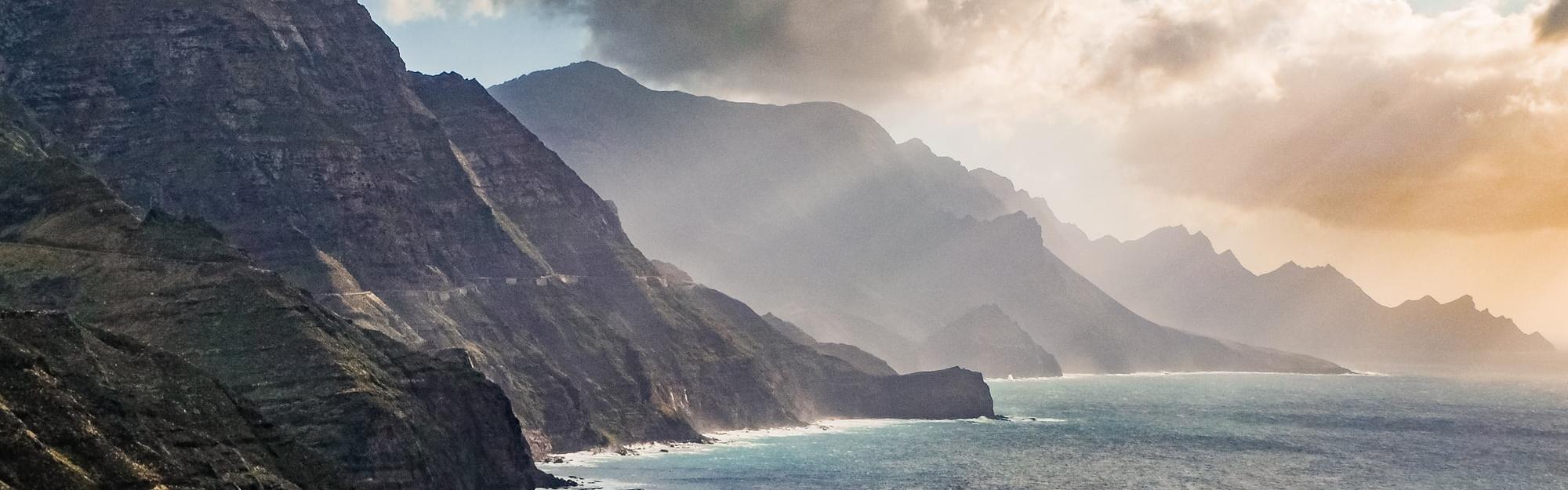
The third largest but most developed of the seven islands in the Spanish-administered Canary archipelago, Gran Canaria has been billed as a miniature continent because of the variety of climates and landscapes it offers. From the big city bustle of the capital, Las Palmas, to the southern desert, mountainous interior and lush, northern woodlands, the destination has lots to offer at any time of year.
The Canary Islands lie in the Atlantic Ocean, about 125 miles (200km) from the African coast and almost 800 miles (1,280km) from the closest European port of Cadiz. Gran Canaria is almost circular, with a diameter of about 32 miles (50km), and is characterised by deep ravines that spread from the centre down to the coast.
The north of the island is humid and lush, with green valleys and volcanic craters, while the south is arid and desert-like, with vast stretches of sandy beach. The interior of Gran Canaria has steep highlands dotted with small villages, sporting white houses with red roofs, banana plantations and orchards bursting with tropical fruits.
Tourists generally favour the southern coastline, and flock to the well-known beaches of Playa del Inglés or Maspalomas, where the sea washes soft sands and empty dunes stretch for miles. The capital, Las Palmas, lies on the northeast tip of the island, between two long beaches, Las Caletas and Alcaravaneras.
Things to do in Gran Canaria
Gran Canaria has a plethora of fantastic attractions that will appeal to all kinds of travellers. Tourists visit mainly to enjoy the resorts and beautiful beaches, but there's a lot to enjoy besides sun, sand and sea.
Animal lovers should head to Palmitos Park, Reptilandia and Parue de los Cocodrilo to engage with all sorts of creatures, while culture lovers should stop at the Museo Canario in Las Palmas to admire the world's largest collection of Cro-Magnon skulls. The Casa de Colon, a historic old house that's now a sort of maritime museum, is worth seeing as well. For something completely different, visitors should try Sioux City in San Agustín for a wild-west day out, while the historic town of Arucas remains a popular tourist attraction.
Getting around Gran Canaria to explore the varied landscapes and various towns and resorts is easy, as plenty of cheap, metered taxis are available. Grand Canaria also has reliable and efficient bus services that operate around the resorts and to all the main towns on the island; there's nowhere on the island that takes much longer than an hour to get to by bus. Local car rental companies have offices in all the main resorts for those who prefer to explore independently.
Museo Canario
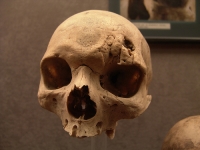
The Museo Canario boasts mummies and the world's largest collection of Cro-Magnon skulls. The permanent exhibition is devoted solely to the aboriginal population of Gran Canaria, who inhabited the islands from the second half of the first millennium BC up until the 15th century. It covers things such as religion and mythology, funerary practices, economic activity and the organisation of society. The award-winning museum in Las Palmas houses the most complete and comprehensive archaeological collection in the Canary Islands and should be of great interest to anybody keen on archaeology, anthropology and the ancient history of the Canary Islands. There's a room full of the skeletal remains of the ancients, which is spooky but fascinating.
Casa de Colon
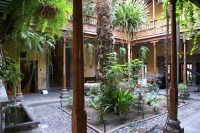
Christopher Columbus is believed to have stayed in the Casa de Colon at various times. Situated in the historical quarter of Vegueta in Las Palmas, the house now serves as a museum that displays relics of early transatlantic voyages and pre-Columbian cultures, as well as acting as a cultural centre for the study of the Canary Island's relationship with the Americas. The building is a famous example of the architecture of the Canary Islands, and has heavy wooden balconies, patios, fountains and some unusual ornamental features. It was once the residence of Las Palmas's early governors.
Arucas
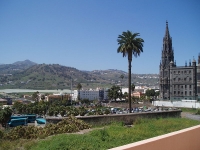
The delightful town of Arucas sits beneath a dormant volcano on the northern coast of Gran Canaria, and is one of the most popular places for tourists to visit. The neat town is dominated by the majestic Church of San Juan Bautista, which local workers carved in stone. It's possible to take a short walk out of the town to the Montana de Arucas viewpoint for a panoramic look at the northern coastline. The town is scenically situated, surrounded by fields of corn and potatoes and banana plantations, and the Palmitos ravine provides some beautiful vistas. The stunning, UNESCO-listed Gran Canaria Biosphere Reserve is also easily accessible from Arucas.
Palmitos Park
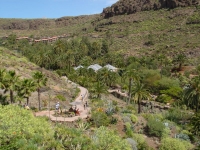
Palmitos Park is situated four miles (6km) inland from Arguineguin on the south coast, and presents a colourful and entertaining look at nature through a botanical garden, zoo and aquarium. The park is a subtropical oasis containing thousands of birds, fish, animals, trees, plants and particularly orchids. The orchid house is the largest in the Canary Islands and the range is astonishing. Visitors will also find a cactus garden, a huge butterfly house and an aquarium featuring a recreated riverbed. Attractions include dolphin shows and a number of bird shows including displays by birds of prey, parrots and exotic birds. Popular displays help fund the park's serious conservation programmes.
Aqualand Gran Canaria
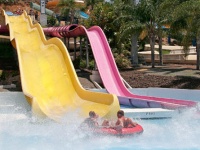
Aqualand is a must for all families visiting Gran Canaria, especially those with children. The wide range of slides, pools, and rides will keep the young and the young at heart happily entertained for hours. Those looking for an injection of adrenalin should try the wide array of thrill rides, while young children have their own water playground with fun mini slides and swings. There is a surf beach and a lazy river, which families can enjoy together, and there are plenty of benches and beach areas for relaxing and picnicking. Lockers and sun loungers cost a little extra, but visitors do get free bags to keep their towels and other belongings in. The park is clean and well maintained, generally receiving rave reviews from tourists.
Holiday World
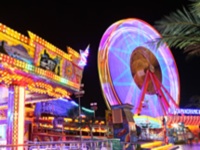
Holiday World is a fun park that features a wide variety of activities and caters specifically to families on holiday in Gran Canaria. Kids of all ages can enjoy rides such as bumper cars, a Ferris wheel, roller coasters and a pirate ship, as well as ten-pin bowling, pony rides and a parrot show. There's a playground area for children too young to enjoy the rides. A range of restaurants and fast-food outlets are available and, after dark, there are some nighttime entertainment options such as frequent live shows and music concerts, an Irish pub and some other drinking and dancing venues.
Things to do with kids in Gran Canaria
Gran Canaria has many fantastic family attractions, and kids will have a great time exploring the island. There are a number of good beaches for children, although families may prefer to seek out the sandy stretches instead of the dramatically beautiful black beaches, which can be a bit pebbly.
Visitors should take a day trip to Palmitos Park for an interesting day out with birds and orchids, or for thrills, Parque de los Cocodrilo is great for those with a love of predators. The zoo on the other side is perfect for younger kids to explore. Playa del Ingles is brimming with kid's activities as it has everything from amusement arcades and mini-golf to water parks and go-karting.
Another fun day out in Gran Canaria is a visit to Sioux City, which was built originally as a stage set for an American western film in 1972, but developed into a Wild West theme park complete with cowboys, Native Americans, Mexicans, and of course, a sheriff. There are shows throughout the day that feature bank robberies, saloon fights, cattle stampedes, rodeos and gunfights at the OK Corral. Between shows visitors can enjoy a barbeque or taste the culinary delights of the Three Star Saloon.
Aqualand Gran Canaria
Aqualand is a must for all families visiting Gran Canaria, especially those with children. The wide range of slides, pools, and rides will keep the young and the young at heart happily entertained for hours. Those looking for an injection of adrenalin should try the wide array of thrill rides, while young children have their own water playground with fun mini slides and swings. There is a surf beach and a lazy river, which families can enjoy together, and there are plenty of benches and beach areas for relaxing and picnicking. Lockers and sun loungers cost a little extra, but visitors do get free bags to keep their towels and other belongings in. The park is clean and well maintained, generally receiving rave reviews from tourists.
Holiday World
Holiday World is a fun park that features a wide variety of activities and caters specifically to families on holiday in Gran Canaria. Kids of all ages can enjoy rides such as bumper cars, a Ferris wheel, roller coasters and a pirate ship, as well as ten-pin bowling, pony rides and a parrot show. There's a playground area for children too young to enjoy the rides. A range of restaurants and fast-food outlets are available and, after dark, there are some nighttime entertainment options such as frequent live shows and music concerts, an Irish pub and some other drinking and dancing venues.
Shopping
Gran Canaria has a wide range of shopping opportunities for visitors and, apart from the regular souvenir shops and tourist tat, there's a fine choice of shops and boutiques in just about every town and resort. The Canary Islands enjoy duty-free shopping and Gran Canaria caters well to tourists. The Yumbo and Kasbah centres in Playa del Ingles and Centro Civicoin Puerto Rico are great for buying almost anything, while electrical shops, photographic equipment and imitation designer wear stalls abound.
The Faro 2 Complex in Maspolamas is the place to go for designer boutiques, jewellery, perfumes and designer wear, while the 13-storey El Corte Ingles in Las Palmas is Spain's largest national department store and the Las Arenas Mall in Las Canteras is a favourite with tourists. Puerto Morgan's souvenir shops are more arty-crafty and sell less junk than the usual stores dotted around the island's resorts, but everything from fresh fruits and produce to clothing and football shirts can be picked up at the Friday morning market in town. Perhaps the largest street market in Gran Canaria, and a must for shopaholics, is held every Tuesday and lies in the south coast town of Arguineguin. Popular souvenirs and gifts include banana-leaf baskets, pottery, embroidered goods and felt hats.
Nightlife
The fun, energetic nightlife in Gran Canaria includes nightclubs, foam parties, karaoke, casinos and cabarets, and is mostly found around Playa del Ingles. Here, the Kasbah Centre is brimming with pubs and clubs, which are open until the early hours.
If travellers are looking for a gay party scene, they should head to the Yumbo centre. Entrance to most nightclubs is free but drinks and cocktails can be expensive. The capital city also has a great nightlife. Las Palmas' Plaza de Espana, in the Mesa y Lopez district, has pulsating clubs and bars that are open until very late, as well as live bands, jazz bars, pubs, discos and a casino.
The Maspalomas Plaza is great if visitors are looking for a couple of relaxing pints in a bar, and Puerto Rico is one of Gran Canaria's hottest resorts after dark. Playa del Cura is a fantastic location for a mellower evening out and, although there is a club in Puerto Morgan, most of the evening entertainment is distinctly low-key in comparison to its neighbouring resorts.
Gran Canaria Climate and Weather
While Gran Canaria has a wonderful climate throughout the year, the south of the island (where the major resorts are located) enjoys its own micro climate with generally better weather than other parts of the island. However, the sea breeze can be quite bracing.
The mountainous regions inland are a bit colder and can experience frost or even snow. The average temperature is comfortable all year round, rarely dropping below 63°F (17°C) and often reaching 82°F (28°C) during the day. The peak summer months are June to August, but May and September are almost as hot.
The warmest month is August, when average temperatures range between 70°F and 80.8°F (21°C and 27°C). Winters are very mild along the coast, especially in the south. During the coldest month, January, average temperatures range between 58.5°F and 69.1°F (14.7°C and 20.6°C).
Rainfall in the summer months is almost non-existent, but showers are possible between October and April. Rainfall is unevenly distributed throughout the island, but the south is generally the driest and most sunny. The best time to travel to Gran Canaria is between May and September, but the island is a wonderful destination year round.
Spain travel info
Electricity
The electrical current is 230 volts, 50Hz. European-style two-pin plugs are standard.
Language
Spanish is the official language, but English is widely understood in areas frequented by tourists. Catalan, Galician and Basque are spoken in the relevant areas.
Money
Spain's official currency is the euro (EUR), which is divided into 100 cents. Money can be exchanged at bureaux de change and major hotels, but banks give the best rates. All major credit cards are widely accepted at most hotels, restaurants, and shops. ATMs are widespread and are generally the cheapest and most convenient method of obtaining money.
Tipping
Hotel and restaurant bills usually include service charges, but additional tips are welcomed for services rendered. In established restaurants, tips of about 10 percent are expected. Drivers of metered taxis expect small tips and it's customary to tip about 5 to 10 percent for most services, including guides.
Health
There are no health risks associated with travel to Spain, and no vaccination certificates are required for entry. Medical facilities are good but comprehensive travel insurance is always advised. Spain has a reciprocal health agreement with most EU countries that provides emergency health care for EU travellers on the same terms as Spanish nationals. After Brexit, the Global Health Insurance Card (GHIC) replaced the European Health Insurance Card (EHIC) for UK citizens. The GHIC allows UK citizens access to state healthcare during visits to the EU. The GHIC is not valid in Norway, Iceland, Liechtenstein or Switzerland, nor is it an alternative to travel insurance. EU travellers should take a European Health Insurance Card (EHIC). Travellers should take any medication they require along with them, in its original packaging and accompanied by a signed and dated letter from a doctor detailing what it is and why it is needed.
Safety
Most visits to Spain are trouble-free except for occasional street crime. Petty crime, such as pickpocketing and purse snatching, is most common in larger cities, particularly during holidays, festivals and weekends, and especially on public transport and in tourist areas. Thieves may work alone or in groups; visitors should be wary of strangers who offer or ask for help of any kind, or inform them of a stain on their clothes, as these are often ways of providing a distraction for accomplices. There are also scams involving letters for outstanding traffic fines or Spanish lottery winnings. Travellers can avoid incidents if they exercise all the normal precautions.
Local customs
Smoking in public places is banned and stiff fines will be imposed for smoking in areas such as enclosed public spaces, areas where food is prepared and sold, public transport, non-smoking areas of bars and restaurants, and any places that cater for children. Drinking alcohol in the streets of Madrid and the streets of the Canary and Balearic Islands is illegal.
Doing business
The business culture in Spain is slowly shifting but, for now, it's entrenched in tradition and it can take some time for foreigners to gain a foothold in the Spanish working world. It's important never to undermine authority as hierarchy is central to Spain's business world. Managers tend to make decisions without considering input from their colleagues.
A strong emphasis is placed on social status, character attributes, and personal pride. Success is often hinged upon being well-dressed, honourable, and dignified, while also exhibiting great social skills. Business meetings are generally conducted face-to-face and can go on for long periods, as Spaniards prefer long deliberations in order to avoid uncertainty in corporate dealings. Business meetings in Spain tend to tread a fine line between personal and formal.
Conducting business in Spain can entail navigation through a lot of red tape and bureaucracy. Spanish is the language of business, but some of the larger multinationals conduct meetings in both English and Spanish. Business hours are often quite varied, but generally open by 9am and close in the mid-evening with a two-hour lunch break during the early afternoon.
Business attire is quite conservative with men wearing dark or linen suits, shirts and silk ties. Women should wear modest dresses or tailored suits. Brand names or labels attract affirmation from colleagues and associates.
After the conclusion of successful negotiations, gifts are appropriate. Gifts should be of high quality and, when receiving a gift, it should be opened in front of the giver. Business cards are important and should be bilingual. Meetings are best scheduled for mid-morning, and establishing a formal yet personable environment is important before beginning. Meetings often occur over lunches and dinners.
Duty free
Travellers from EU countries are allowed the following items duty free: 800 cigarettes or 400 cigarillos or 200 cigars or 1kg tobacco; 110 litres beer; 90 litres wine; and 10 litres spirit. Travellers from non-EU countries may have 200 cigarettes or 100 cigarillos or 50 cigars or 250g tobacco; 1 litre spirits, 4 litres wine, and 16 litres beer.
Communications
The international access code for Spain is +34. WiFi is widely available; travellers can purchase local SIM cards for unlocked phones or use eSIMs if their cellular providers support it on their networks.
Passport & Visa
The borderless region known as the Schengen area includes the following countries: Austria, Belgium, Czech Republic, Denmark, Estonia, Finland, France, Germany, Greece, Hungary, Iceland, Italy, Latvia, Lithuania, Luxembourg, Malta, The Netherlands, Norway, Poland, Portugal, Slovakia, Slovenia, Spain, and Sweden. All these countries issue a standard Schengen visa that has a multiple entry option, allowing the holder to travel freely within the borders of all. Non-EU nationals must hold a return or onward ticket, all necessary documents for onward travel and sufficient funds. It is highly recommended that passports have at least six months' validity remaining after the intended date of departure from Spain. Immigration officials often apply different rules to those stated by travel agents and official sources.
Entry requirements
United States citizens require a passport valid for three months beyond the period of intended stay. No visa is required for stays of up to 90 days within a 180 day period.
British citizens require a passport valid for three months beyond the period of intended stay. No visa is required for stays of up to 90 days within a 180 day period.
Canadian citizens require a passport valid for at least three months beyond period of intended stay. No visa is required for stays of up to 90 days within a 180 day period.
Australian citizens require a passport valid for at least three months beyond period of intended stay. No visa is required for stays of up to 90 days within a 180 day period.
South African citizens require a passport valid for at least three months beyond period of intended stay. A visa is required.
Irish nationals require a valid passport, but a visa is not necessary.
New Zealand citizens require a passport valid for at least three months beyond period of intended stay. No visa is required for stays of up to 90 days within a 180 day period.
Useful contacts
Spanish Tourist Office, Madrid: www.spain.info.
112 (General).