

City guides
 United States of America
Pennsylvania
United States of America
Pennsylvania
Philadelphia Travel Guide
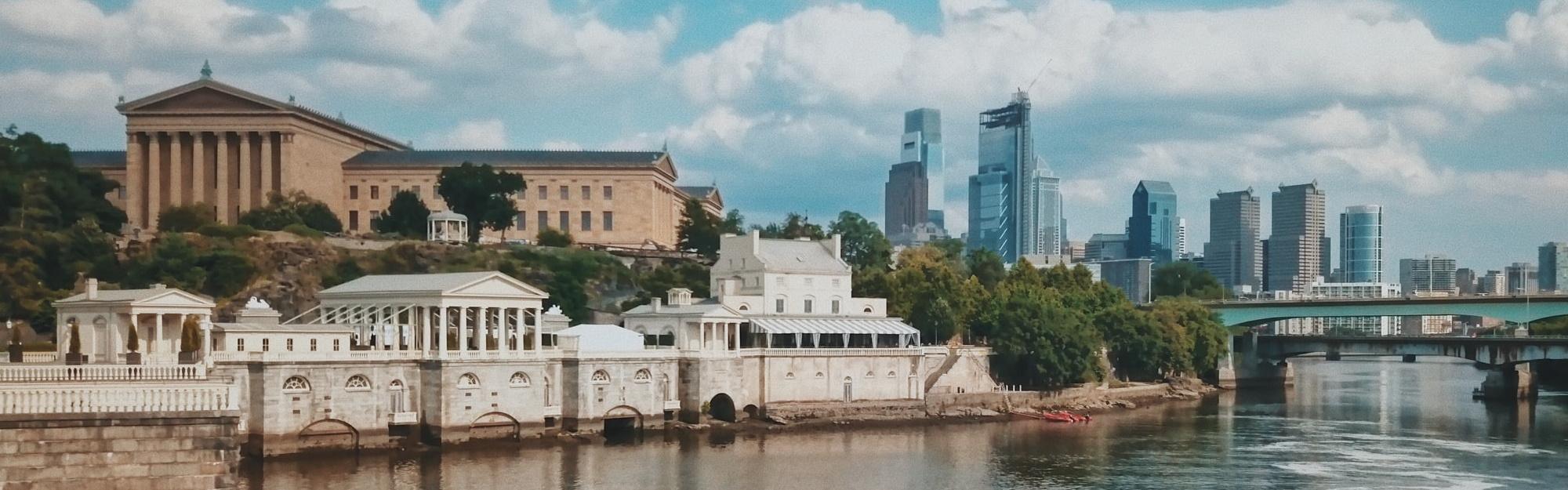
With impressive food, music and art scenes, diverse neighbourhoods, and oodles of fascinating history, Philadelphia is one of the best-loved cities in the US. Endearingly known as the 'City of Brotherly Love' and the 'Cradle of Liberty', Philadelphia is a fun and interesting destination, associated with lofty and inspiring moments in the history of the US. The many famous historic attractions are the main lure for travellers, but Philadelphia really does boast something for everybody.
A holiday in Philadelphia is a delightful exercise in exploring the city's many diverse districts. The Old City is where the Liberty Bell takes pride of place; the city centre is filled with shopping malls and museums; South Philly is Italian-flavoured; and the the North Liberties district is trendy and arty. Rich history and a lively student population combine to ensure a lively Philadelphia holiday. Regarded as one of the nation's most dynamic destinations, a holiday in Philadelphia offers enough to please any age group.
Best time to visit Philadelphia
No matter what time of year travellers visit Philadelphia, there will always be a plethora of attractions to enjoy. In spring the city is bedecked with spectacular cherry blossoms, and summer, especially around 4th July, is especially festive with many celebrations centred in the historic district. In autumn the cultural calendar is in full swing with numerous concerts and theatrical productions. In winter it can be very cold, but this is a good time to travel to Philadelphia to take advantage of the city's excellent shopping.
What to see in Philadelphia
-Visit Franklin Court, the former site of Benjamin Franklin's home.
-Enjoy perusing the celebrated collection of the Philadelphia Museum of Art.
-See the iconic Liberty Bell, displayed in the historic Independence Hall.
-Wander around the Christ Church Burial Ground, where many US leaders are buried.
What to do in Philadelphia
-Explore Philadelphia's most visited museum, the Franklin Institute Science Museum.
-Treat the kids to a fun day at Philadelphia Zoo, the oldest zoo in the US.
-Take an excursion to Hershey's Chocolate World, heaven for chocoholics.
-Spend a day wandering the Historic District of nearby Doylestown.
Beyond Philadelphia
Many attractions await visitors just beyond the city limits. The Brandywine Valley is full of scenic beauty as well as many cultural attractions; Dutch Country is one of the most rewarding summer road trip destinations in the US; and the famous Gettysburg National Military Park lures military history buffs.
Getting there
Philadelphia International Airport, located seven miles (11km) from downtown, is the main air traffic hub in the region, and one of the busiest airports in the US.
Did you know?
-The first American flag was designed in Philadelphia, by Betsy Ross.
-Philadelphia is considered to be one of the most haunted cities in the US.
-The first American stock exchange and the first American newspaper originated in Philadelphia.
Things to do in Philadelphia
Once home to the founding fathers, Philadelphia is the birthplace of the United States and the site of the signing of the Declaration of Independence. Most of the city's tourism revolves around these historic events and sites, while the Philly Cheese Steak shouldn't be underestimated.
Top attractions in Philadelphia include the Liberty Bell, a symbol of freedom across the country, and Independence Hall. The National Constitution Center boasts a number of historical exhibitions, while Franklin Court is the former location of Benjamin Franklin's house.
Elfreth's Alley is the oldest residential street in the USA, while Christ Church, founded in 1695, is where many of the country's leaders are buried. However, this is just a smattering of what the city has to offer and sightseers will have their hands full.
The Philadelphia CityPass saves visitors up to 50 percent on admission to some of the city's top attractions, with the added bonus of allowing holders to skip entrance queues. The pass is purchasable online via the official website.
Independence National Historical Park
On 8 July 1776, the Liberty Bell at Independence Hall summoned citizens to hear the first reading of the Declaration of the Independence. Today, the building stands proudly and is revered as the birthplace of the American nation. The Independence National Historical Park is an eight-block neighbourhood in the very centre of old Philadelphia. The Liberty Bell itself is on display in a pavilion in Market Street between 5th and 6th Street. Originally built as the Pennsylvania State House in 1732, Independence Hall on Chestnut Street is now famous for being where the Declaration of Independence and later the Constitution of the United States were ratified. Historically significant buildings and museums pack out the rest of the 34 acre park, interpreting the events and lives of main figures involved in Philadelphia's years as the capital of the USA from 1790 and 1800. These include former presidents George Washington and John Adams.
Franklin Institute Science Museum
One of Philadelphia's most frequented museums, the Franklin Institute on Benjamin Franklin Parkway opened in 1934 and fast became recognised for its innovative and imaginative exhibits, demonstrating the influence of science in our lives. The museum complex divides into various sections. Firstly, the Franklin National Memorial is dedicated to Benjamin Franklin. It features a huge statue of its namesake and a collection of memorabilia associated with the famous statesman. Another section features hands-on and interactive science and technology exhibits, ranging from a walkthrough model of heart to a lightning gallery. The basement is the location of the Fels Planetarium. There are numerous permanent exhibitions in addition to an ever-rotating roster of temporary offerings, such as Amazing Machine, The Franklin Air Show, and The Train Factory. Topics and themes covered include space, the earth, computers, chemistry, health, and electricity. There is also an IMAX theatre, showing a variety of films. Located on the lawn between the main museum buildings, the Science Park is a garden full of high-tech play structures such as a stand-on organ, maze and a high-wire bicycle. The museum also features several restaurants and a snack bar.
Philadelphia Museum of Art
Established in the 1870s, the elegant Philadelphia Museum of Art houses a permanent collection of more than 225,000 works in 200 galleries. The museum is recognised as being one of the finest art collections in the USA. Exhibits include not only magnificent paintings, but also sculptures, period furniture, and faithfully restored historic rooms. Built in the style of a Greco-Roman temple, the beautiful building housing the collection stands upon a hilltop off Benjamin Franklin Parkway. The two storeys are designed with L-shaped wings leading off a central court, and exhibits are arranged in period groupings. The museum also has a cafeteria and a formal restaurant, and regularly hosts visiting exhibitions.
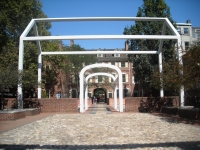
Franklin Court
The part of the Independence National Historical Park between 3rd and 4th Street is where the home of Benjamin Franklin once stood. While the actual house no longer exists, a 54-foot-high (16m) steel skeleton ghost structure covers the remaining courtyard. It provides a novel and fascinating tribute to the life of Franklin, allowing great insight into the iconic former statesman. His many vocations included printer, diplomat, inventor, publisher, author, and postmaster, as well as the founder of the University of Pennsylvania. Visitors can peruse an underground museum filled with paintings, objects, and inventions associated with Franklin. There is a bank of telephones with many testimonies from famous personalities about the achievements of the great man. There's also a US Postal Service Museum and a nearby home displays an architectural exhibit explaining Franklin's fire-resisting building techniques. Another building houses an 18th-century printing office and bindery with demonstrations. Alongside sits the restored office of the newspaper published by Franklin's grandson Benjamin Franklin Bache.

Philadelphia Zoo
Philadelphia Zoo opened in 1874, the first of its kind in the USA. Today, it's one of the world's most renowned zoological gardens, replete with animal exhibits, award-winning education and conservation programmes, recreational opportunities, and scientific accomplishments. More than one million visitors flock to this leading city attraction. Among special features offered are more than 1,600 rare and exotic animals and 42 acres of picturesque Victorian gardens. Highlights include the Peco Primate Reserve, an interactive exhibit featuring around 10 primate species. The Rare Animal Conservation Center allows intimate views of some of the world's most endangered animals. The Reptile and Amphibian House has an interactive adventure path, showcasing dozens of species such as the King Cobra. Additionally, there is an African animal section, and a children's petting zoo.
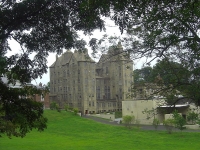
Doylestown
About 42 miles (68km) north of Philadelphia, the city of Doylestown sits in the centre of Bucks County. Also serving as the county capital and renowned for its historic district, containing more than 1,0000 structures dating from 1851 and 1910. This treasure-trove of architectural heritage draws hundreds of visitors to the city, named as one of a 'Dozen Distinctive Destinations' by the National Trust for Historic Preservation. The city also offers antique and handcraft shops, numerous restaurants, and vast recreational possibilities in the surrounding Bucks County countryside. Visitors may discover the 300-year-old Fallsington Village, go fishing and boating on the wide Delaware River, or hike scenic nature trails. Also nearby is the site where George Washington crossed the Delaware River and changed the course of the American Revolution.
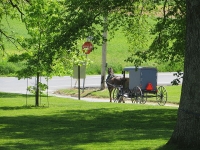
Dutch Country
Rated as one of the most popular summer drives in America, a tour of Pennsylvania's Dutch Country is a relaxing and rewarding experience enjoyed by millions of visitors every year. Central to the area is Pennsylvania's scenic Lancaster County, just one and a half hour's drive west of Philadelphia. The main drawcard is the fascinating lifestyle of the local Amish farming communities. They live according to age-old traditions and values without making use of any modern conveniences, even eschewing electricity and telephones. The area abounds with interesting historic and rural attractions, including 28 picturesque covered bridges on quiet country roads, the oldest Mennonite meeting house in America, and the home of a former US president. Many visitors opt to tour the area in a horse and buggy or hire a bicycle. A big attraction in the region is food, benefiting from the local agriculture mantra of being 'fresh from the farm'. This home-style cooking makes its way onto the menus of many local restaurants and markets.
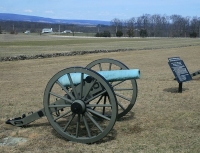
Gettysburg National Military Park
The small town of Gettysburg in Adam's County, south central Pennsylvania, was the site of the largest battle in the American Civil War. It was the inspiration for Abraham Lincoln's celebrated Gettysburg Address. The Battle of Gettysburg started on 1 July 1863, lasting two days and resulting in a Union victory. The Gettysburg National Military Park stands testimony to the battle, incorporating about 6,000 acres of land, 26 miles of park roads, and more than 1,400 monuments, markers, and memorials. One of the most famous military encounters in US history, the Battle of Gettysburg has been immortalised in many books, paintings, poems, and movies. The town is now a pilgrimage of a sort for military history buffs and anybody interested in the Civil War and Abraham Lincoln.
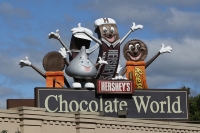
Hershey’s Chocolate World
No chocolate lover should miss out on the treat of visiting Hershey's Chocolate World in the town where chocolate making has become an art. Billed as 'The Sweetest Place on Earth', it's about 90 miles (145km) from Philadelphia via Lancaster. The official visitors centre of the Hershey Foods Corporation offers free-of-charge factory tours. The Chocolate Tour begins in a tropical rainforest where the chocolate beans grow, following the journey as the beans make their way to the Hershey's factories. There are also gift and souvenir shops and a food court.
Brandywine Valley
The cultural and historical hub of Brandywine Valley sits about 35 miles (63km) west of Philadelphia, on US 1, which is accessibly by both bus and train. It has magical landscapes, country inns, fascinating museums, and beautiful gardens, all found in the heart of Chester County. Visitors can enjoy Longwood Gardens, the Brandywine River Museum with its unique art collection in a grist mill, the Chaddsford Winery, and shopping in historic Kennett Square.
Please Touch Museum
The Please Touch Museum is located in Memorial Hall in Fairmount Park and is a shining example of what must be one of the rarest cultural attractions anywhere in the world: a museum where children are actually encouraged to lay their hands on exhibits. Mainly aimed at kids aged seven years and younger, the museum seeks to educate and entrance its young visitors in equal measure, offering them a hands-on experience of an assortment of life-size interactive exhibition zones. Although the exhibits change frequently, highlights have included an Alice in Wonderland area complete with rabbit holes and garden mazes, a miniature supermarket, and a scaled down SEPTA bus display. Parents and grandparents are undivided in their approval of the museum and its child-friendly approach, describing it as an ideal way to spend a day out with the kids. The museum also offers a delicious selection of wholesome food and drinks.
Getting Around
The city of Philadelphia is well-equipped with public transport, most of it run by SEPTA (Southeastern Pennsylvania Transportation Authority). There is a subway system, but this does not serve the city centre. It's mainly useful for accessing the extremities of the city.
Good, reliable buses are the main standby, particularly the purple PHLASH bus service designed for visitors. The PHLASH route loops through downtown, covering numerous major attractions near about 22 stops.
SEPTA buses and commuter trains cover numerous fixed routes through the rest of the city and suburbs.
Taxis are plentiful in the city centre but scarcer elsewhere, particularly at night. It is possible to rent cars, but not strictly necessary. Having a vehicle can be useful for those wanting to explore further afield. Uber, Lyft, and other ride-hailing app services are also available.
Philadelphia Climate and Weather
Philadelphia enjoys a humid subtropical climate, with hot, muggy summers, mild shoulder seasons, and cold winters. Rainfall spreads fairly evenly throughout the year with some wet weather every month. In summer, between June and August, temperatures average between 63F (17C) and 87F (31C).
In winter, between December and February, temperatures average between 25F (-4C) and 44F (7C). Snowfall is unpredictable, with some winters experiencing only light snow and others characterised by continual snowstorms. The city centre and inner suburbs generally have light snow, with heavier falls experienced to the north and west of the city.
United States of America travel info
Electricity
The electrical current is 120 volts, 60Hz. Plugs are mainly the type with two flat pins, though three-pin plugs (two flat parallel pins and a rounded pin) are also widely used. European appliances without dual-voltage capabilities will require an adapter.
Language
English is the most common language spoken but Spanish is often heard in the south-western states.
Money
The official currency is the US Dollar (USD), which is divided into 100 cents. Only major banks exchange foreign currency. ATMs are widespread and credit cards are widely accepted; Apple Pay and Google Pay are very popular. Banking hours are Monday to Friday 9am to 3pm.
Tipping
A 15 percent tip is expected by taxi drivers, bartenders, hairdressers and waiters, but travellers shouldn't tip in fast-food or self-service restaurants. In expensive restaurants or for large parties, the tip should be 20 percent of the bill. It's normal to tip staff such as valets and porters in hotels; this is discretionary, although a minimum of $5 is expected. Most services are customarily tipped if the service is good.
Health
There are no specific health risks associated with travel within the USA. Medical facilities are excellent, but expensive. Only emergencies are treated without prior payment and treatment can be refused without evidence of insurance or proof of funds. Good medical insurance is essential.
Safety
Travel within the United States is generally trouble-free, though travellers should be aware that the US shares with the rest of the world an increased threat from terrorist incidents. Security has been heightened, particularly at airports. Restrictions on hand luggage apply and travellers are advised to check on the latest situation with airlines in advance. Travellers should also be alert to the dangers of car and street crime in cities and should use common sense and take basic precautions. Hurricanes are common between June and November, putting the southern USA, including the Gulf Coast and the eastern US at risk. There's a risk of wildfires in many dry areas in the US, particularly on the West Coast from March to November.
Local customs
Laws vary from state to state, including speed limit, fines and punishment. The age at which alcohol may be legally bought and consumed is 21 years.
Doing business
In such a large country, filled with so many diverse groups, business practices may differ according to each state, though rarely to any large degree. The East Coast is traditionally more formal than the West Coast, though in states such as California, dress code and conservative appearance are as common as they would be in New York. Punctuality is important throughout the country and it's considered rude to be late for a meeting. Gift-giving is uncommon as it may be construed as bribery. Appropriate titles (Mr, Mrs, Ms) are used upon introduction and until otherwise stated. Americans favour politeness and greetings of 'Hello' and 'How are you?' are often expressed with sincerity. Business hours may vary in each state, but an 8am start and 5pm finish Monday to Friday is the most common with an hour over lunch.
Status and age are not necessarily indicative of seniority, nor do they carry much weight in themselves. Those doing business in the States should be mindful of this fact; foreigners should never make assumptions about someone's position or rank. Best practice is to be respectful to all parties. That said, the US upholds a hierarchal business structure in which 'the boss' is the ultimate decision-maker. Senior leaders have the power of the last word, and can go against the grain just as easily as they can follow popular opinion. Foreigners should concentrate on winning over this individual, even if the greater group seems unsupportive. Americans value a direct style of communication. In this fast-paced, consumer culture 'time is money', and small-talk is viewed as unnecessary and wasteful. It's best for foreigners to get to the point quickly, speak about issues in a frank and open manner, and to avoid taking offence if someone questions or challenges them outright.
Duty free
Travellers to the United States who are returning residents of the country do not have to pay duty on articles purchased abroad to the value of $800 provided their stay was longer than 48 hours and their duty-free allowance was not used in the 30-day period prior. For passengers arriving from Samoa, Guam and the U.S. Virgin Islands, a duty-free allowance of $1,600 is allowed. The following items are included in this: 50 cigarettes and 10 cigars and 150 millilitres (5 fl. oz.) of alcoholic beverages or 150 millilitres (5 fl. oz.) of perfume containing alcohol. Restrictions may apply to goods from Cuba, Iran, North Korea, Burma (Myanmar), Angola, Liberia and Sudan. It is prohibited to import Cuban cigars from any country.
Travellers to the United States who are non-residents do not have to pay duty on the following items: 50 cigars or 200 cigarettes and gifts to the value of $100 provided their stay in the USA is not less than 72 hours and that the allowance has not been used in the preceding six-month period.
Prohibited items for residents and non-residents include meat or meat products, poultry, narcotics, absinthe, plants, seeds, vegetables, fruits, soil, live insects and other living plants or animal pests. Fish is prohibited unless it carries disease-free certification. Wildlife and animals or their by-products carry restrictions. Dairy products and eggs from specified countries are not allowed. Firearms and ammunition are not allowed without the necessary license and permit.
Communications
The international country dialling code for the United States is +1. Mobile networks cover most of the country, especially all urban areas; travellers can purchase local prepaid SIM cards for unlocked phones or use eSIMs if their cellular providers support it on their networks. WiFi is widely available.
Passport & Visa
It is highly recommended that travellers' passports have at least six months' validity remaining after the intended date of departure from them travel destination. A visa is required for short visits unless travellers qualify for entry under the Visa Waiver Program.
The Visa Waiver Program (VWP) enables citizens of certain countries to travel to the US for a stay of up to 90 days without a visa. Visitors under the VWP need a valid Electronic System for Travel Authorization (ESTA), which allows the US government to screen all visitors before travel. Visitors entering the country under the VWP must have a machine-readable passport (MRP) that has a barcode on the photo page. Travellers under the VWP must have passports that include biometrics if they wish to enter the country without a visa, which means that passports must contain unique personal data such as fingerprints or iris details. All passports must contain a digital photo image in order to travel visa-free. All visitors to the USA have a photograph and two fingerprints taken by an inkless scanner on arrival, including those travelling visa-free under the VWP.
As part of the Western Hemisphere Travel Initiative (WHTI), all travellers travelling between the United States and Canada, Mexico, Bermuda, and the Caribbean region are required to present a passport or other valid travel document to enter or re-enter the United States. If departing from the USA, a valid passport is required by immigration authorities. Immigration officials often apply different rules to those stated by travel agents and official sources.
Entry requirements
US citizens require passports.
UK nationals require a passport valid for duration of stay. Most passport holders can get an Electronic System for Travel Authorisation (ESTA) through the Visa Waiver Programme, which allows travel to the US for up to 90 days. The VWP includes tourism, certain types of business visit and transit to another country.
The most important requirement on entering the U.S. is providing proof of Canadian citizenship. A valid Canadian passport is the best document to prove Canadian citizenship and the right to return to Canada. However, several other documents can serve, depending on the mode of transport. Generally, Canadian citizens do not require visitor, business, transit or other visas to enter the United States from Canada, though there are some exceptions.
Passports must be valid for the period of intended stay. If visiting the US for fewer than 90 days, Australian nationals may be eligible to apply for an Electronic System for Travel Authorization (ESTA), and enter under the Visa Waiver Program (VWP).
South Africans must hold a passport valid for duration of stay. A visa is required.
Passports must be valid for duration of stay. Irish nationals can get an Electronic System for Travel Authorisation (ESTA) under the Visa Waiver Programme for entry into the United States.
Passports must be valid for duration of stay. New Zealand nationals can get an Electronic System for Travel Authorisation (ESTA) under the Visa Waiver Programme for entry into the United States.