

City guides
 United Kingdom
England
United Kingdom
England
The Lake District Travel Guide
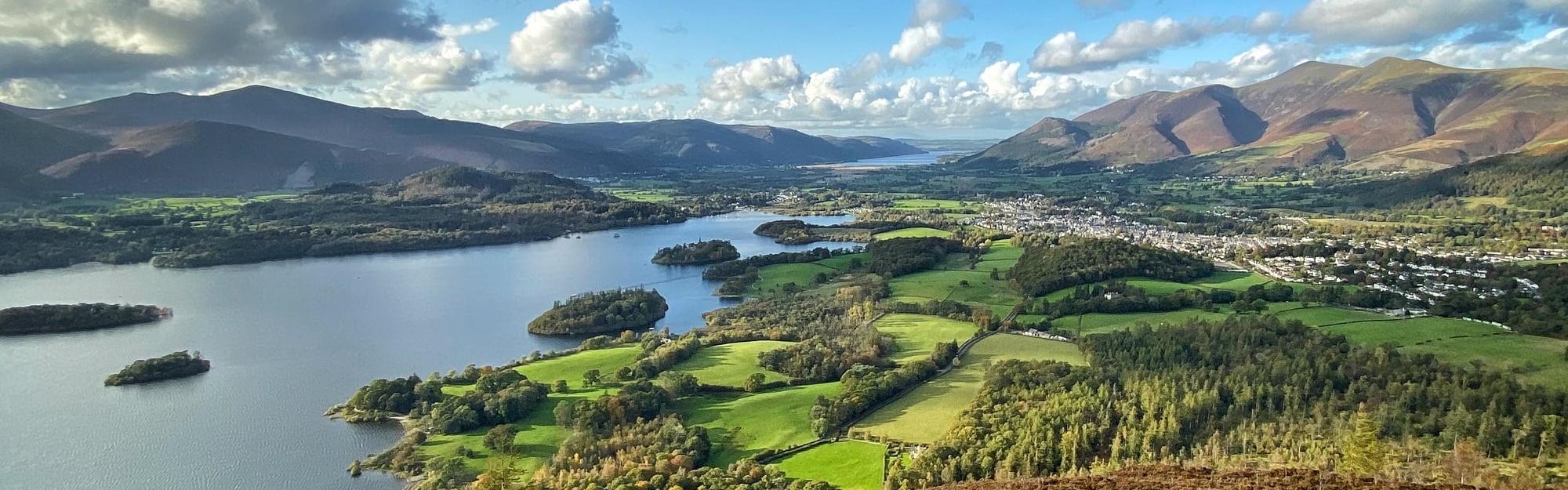
The Lake District sits within Cumbria, in the northwest of England, and is home to a series of expansive lakes and rocky mountains that together form some of the most strikingly beautiful vistas in the country.
The landscape is a mix of rolling farmlands, green valleys and heather-covered moors, interrupted here and there by bustling towns and villages that have been popular holiday destinations in England for hundreds of years.
Despite attracting more than 10 million visitors each year, the Lake District retains its peaceful and pastoral atmosphere, and hikers can go for miles without seeing any living creatures but sheep and cows.
The Lake District is the largest national park in England and stretches some 885 square miles (2,292 sq km), from Caldbeck in the north to Lindale in the south, and from Ravenglass in the west to Shap in the east.
Each of the lakes within the area has its own character: Windermere, Grasmere, and Ullswater are considered the prettiest, but those wishing to avoid the crowds can head for Wast Water, Crummock Water, or Buttermere.
Some of Cumbria's famous residents include William Wordsworth, Robert Southey, Beatrix Potter, and John Ruskin, all writers and poets who drew inspiration from the land and the lakes. Today, the rugged beauty of Cumbria and the Lake District continues to inspire both visitors and locals alike, and it remains one of the most popular regions in England.
Things to do in The Lake District
The Lake District region is primarily adored for its scenic splendour and most visitors come keen to enjoy nature and outdoor activities. A holiday in the Lake District offers visitors a range of activities, from bird watching, lake cruises, and gentle strolls, to mountain biking, water sports, and hiking. The region is home to Scafell Pike, which at 3,209ft (978m) is England's highest peak.
There are also plenty of market towns, galleries, and museums worth visiting in the Lake District, including Dove Cottage and Wordsworth House (both one-time homes of local poet William Wordsworth) and the charmingly preserved former home of Beatrix Potter. The region is still known to inspire many artists and those in search of a creative jolt will not struggle to find painting, photography and writing retreats on offer in the Lake District.
Those in search of ancient sites and castles will also be spoilt for choice. The mysterious ancient stone circle of Castlerigg is one of the region's most enthralling attractions, and as the Lake District was once a military outpost for the Romans the remains of many old forts can be explored. There are also an impressive number of Norman and medieval castles and although many of them are now ruins some visitors find this simply adds to the romance. For grand estates travellers should visit homes such as Holker Estate and Wray Castle.
Dove Cottage and the William Wordsworth Museum
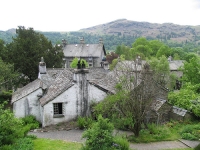
Legendary English poet William Wordsworth lived in Dove Cottage from 1799 to 1813, after which time he moved down the road to the more upmarket Rydal Mount and Gardens. The Dove Cottage residence was the site of his most creative phase and is home to the Wordsworth Museum, exhibiting many artefacts that inspired the writer. The Wordsworth Museum has been described as giving 'the most attention to the fusion of English literature and English art' of any similar establishment in Britain, and is well worth a look. Wordsworth's final abode at Rydal Mount was a stately Victorian house with beautiful views across the valley. This house is also open to the public, and offers visitors lovely walks around the gardens and delicious scones in the tearoom.
Grizedale Forest
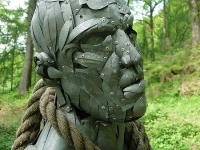
There are some wonderful things to see and do in Grizedale Forest, located in the Lake District near the village of Hawkshead. Visitors can go hiking or ride mountain bikes along the beautiful sculpture trail, or else peruse the galleries of the Brewery Arts Centre. There are easy walking trails and longer routes for the fit. The forest is situated between the lakes of Coniston and Windermere, and offers lovely views of the lakes and mountains between the tree trunks. Grizedale Forest also has an on-site cafe, bike shop and gift shop for visitors to enjoy. Visitors shouldn't forget to pack a camera, as the area is almost unbelievably picturesque.
Hill Top
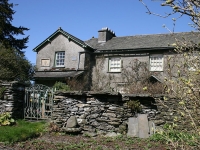
Hill Top is a working farm formerly owned by Beatrix Potter, the famous author of children's books such as and . The cottage, along with Miss Potter's original furnishings and artworks, has been well preserved, and the quaint garden is still kept as she had made it, with a random selection of flowers, herbs, fruit and vegetables. The 2006 film Miss Potter is a wonderful introduction to the life and work of the author, and features stunning scenes of Hill Top and the surrounding countryside. Fans of this interesting author and her quaint English world will relish a visit to the farm.
Holker Estate
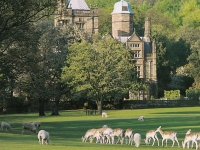
Holker Estate, the home of Lord and Lady Cavendish, is a wonderful attraction for visitors to the Lake District; in fact, it is known as one of the best-loved stately homes in Britain. The elegant Holker Hall and its gardens are open to the public, and there is a fantastic restaurant and gift shop on the premises. The lovely gardens extend into parkland and many visitors will enjoy a ramble in the countryside starting at the house. The estate also hosts the Cartmel Racecourse, a favourite among horse racing enthusiasts. An estate of rare class and elegance, Holker has recently been featured on the popular TV series Masterchef UK.
Windermere
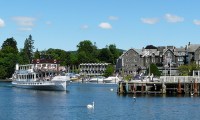
One of the prettiest lakes in Cumbria, Windermere has gathered around it a number of bustling communities offering a lot of fun things to see and do, and has become a very popular tourist destination in the Lake District. The pretty towns that surround the lake offer a number of good restaurants, cafes, shops and pubs. The town of Windermere, which includes the merged Bowness-on-Windermere, has a steamboat museum that operates cruises on the lake; while Ambleside is home to Stock Ghyll Force, a spectacular 70 foot (21m) waterfall, and a local history repository at the Armitt Library and Museum. At the southern end of the lake is Lakeside Pier, which is home to the Aquarium of the Lakes.
Castlerigg Stone Circle
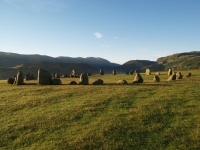
One of Britain's most popular and mysterious attractions, Castlerigg Stone Circle is a must-see for visitors to the Lake District. The Neolithic structure, which is comprised of 38 free-standing stones, some of which reach as high as 10 feet (3m), continues to intrigue eminent archaeologists and casual visitors alike, and its original purpose is still not exactly known. Demonstrating a remarkable geometric and astronomical precision (parts of the circle align perfectly with the sun, moon, and stars), it is thought that the 5,000-year-old circle once filled a very important ceremonial or religious function. However, part of what makes Castlerigg such a wonderful sight for modern-day visitors to Cumbria is its beautiful natural setting. Located on a slight plateau, the views afforded from the Castlerigg site are simply phenomenal: 360-degree panoramas of the surrounding fells, and excellent vistas of Cumbria's highest peaks, such as Helvellyn, Skiddaw, Grasmoor, and Blencathra. Castlerigg has been called 'the most visually-impressive prehistoric monument in Britain' by archaeologist John Waterhouse, and those who make the short trip from Keswick to view the site certainly will not be disappointed.
The Lake District Climate and Weather
The Lake District has a maritime climate and is the wettest region in England, with an average annual precipitation of over 80 inches (2,000mm). March to June (spring and early summer) tend to be the driest months in the Lake District, while October to January (late autumn and winter) are the wettest. The area is also very windy and gale-force winds are quite common. Temperatures are relatively moderate, with the average low being 37F (3C) in winter, and summer temperatures only rising to a high of around 68F (20C). Travellers should go prepared for all sorts of weather and a good raincoat is a must.
United Kingdom travel info
Electricity
The electrical current in the UK is 240 volts, 50Hz. Flat, three-pin plugs are standard.
Language
English is the official language, though visitors will be astonished by the variety of regional accents.
Money
The currency is the British pound (GBP), which is divided into 100 pence. ATMs are available in almost all towns and Visa, MasterCard and American Express are widely accepted. Foreign currency can be exchanged at bureaux de change and large hotels, though better exchange rates are likely to be found at banks.
Tipping
Tips of 10 to 15 percent are expected in restaurants and upmarket hotels in the UK if a service charge hasn't been included. Hotel service staff receive an optional amount, while taxi drivers are usually given 10 to 15 percent of the fare. Tipping bartenders isn't expected, and tipping for other services is discretionary.
Health
There are no specific health risks associated with travel to the UK and food and water can be considered safe. The British National Health Service is excellent, and a number of countries have reciprocal health agreements with the UK including Australia, New Zealand and EU countries. Visitors from other countries such as Canada, South Africa and the United States are advised to take out comprehensive travel insurance.
Safety
It's generally safe to travel throughout the UK.
Local customs
Handshaking is customary when introduced to someone new. Smoking is banned in all enclosed public spaces, including pubs, restaurants and public transport. Queue barging is frowned upon and there is strict etiquette on escalators: stand on the right, walk on the left. Visitors may find Londoners more rushed and less friendly than locals in other parts of the country, particularly on London transport, where tourists are often the only people who talk.
Doing business
The four countries of the United Kingdom, although culturally and historically different, generally keep to the same business practices. Politeness and punctuality are key to good business relations and initial meetings are often conducted formally and impersonally, becoming more open and social as things progress. Business cards are exchanged at introductions, and dress is formal with dark suits preferred. Business hours are generally 8am to 5pm Monday to Friday with an hour taken at lunch.
The communication style can be difficult to adjust to: the British people respect politeness to a point that often obscures their ability to say exactly what they mean. As a result, travelling business people may need to learn to 'read between the lines' and to take cues from tone of voice and facial expression. Humour is also an integral part of the British system of communication, and is used to diffuse a tense situation and to cultivate relationships. Foreigners should never assume that an attempt at humour undermines a person's ability to do their job, or discredits the importance they attach to a deal or negotiation. Furthermore, they shouldn't be fooled into thinking that the British propensity for irony and sarcasm equates with an informal work environment.
Foreigners should be tactful during meetings, avoid becoming emotional and illustrate their experience with the subject at hand. Performance and initiative are looked upon favourably, whereas academic pretension is given far less credence. Meetings are often used as platforms for debate, rather than moments of confirmation, so there should be no surprise if not much progress is made. Foreigners should be sure to respect and appeal to all parties involved, as the British have recently begun to take a far flatter approach to management and the responsibility of decision-making. And if things go well, it's worth purchasing a pint or two for clients or colleagues; though gifts are borderline inappropriate, a round of drinks will rarely be refused.
Duty free
Travellers can bring the following goods into the UK tax or duty free: 200 cigarettes, 100 cigarillos, 50 cigars or 250g of tobacco, 18 litres of still table wine, 42 litres of beer, 4 litres of spirits or strong liqueurs or 9 litres of fortified wine, sparkling wine or other alcoholic beverages of less than 22 per cent volume.
Communications
The international country dialling code for the UK is +44. Mobile phone coverage is extensive and free WiFi is widely available in pubs and coffee shops. Travellers can purchase local prepaid SIM cards for unlocked phones or use eSIMs if their cellular providers support it on their networks.
Passport & Visa
If a visa is not required, travellers should hold a return or onward ticket, and proof of funds for the duration of stay. Passports must be valid for the period of intended stay in the UK. It's highly recommended that travellers' passports have at least six months' validity remaining after the intended date of departure from their travel destination. Immigration officials often apply different rules to those stated by travel agents and official sources. For visitors who are visa exempt up to a maximum stay of six months, the period of stay will be determined by the Immigration Officer on arrival.
Entry requirements
US travellers must hold a passport that is valid for the duration of their stay; a visa is not required for stays of up to six months.
Canadian passports must be valid for at least the expected duration of the stay. No visa is required for stays of six months or less.
Australian passports must be valid for at least six months after the departure date. No visa is required for stays of six months or less.
South Africans require a valid passport and a visa for entry or transit through the UK. South African temporary passports are not recognised.
Under the Common Travel Area agreement, citizens from the UK and Ireland are not required to pass through passport control. They can travel between both countries without a valid passport if they can prove they are a valid UK or Irish national.
New Zealand nationals must hold a valid passport, but no visa is required for stays of up to six months.
Useful contacts
United Kingdom Tourism Website: www.visitbritain.com
999 (General)