

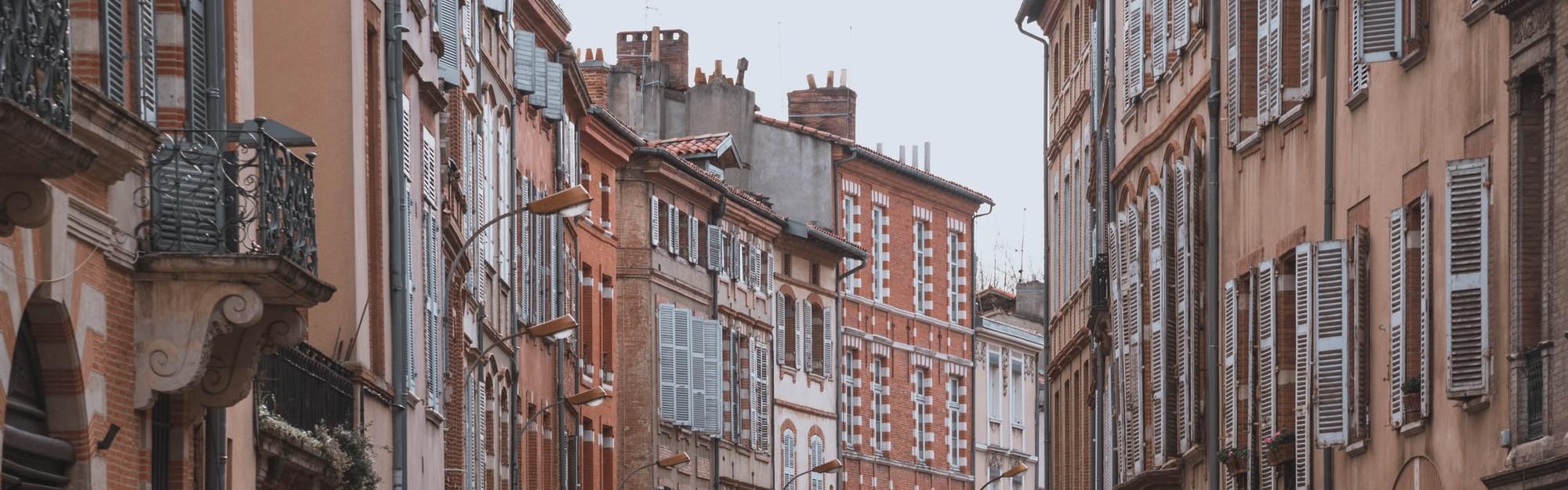

Toulouse Travel Guide
Formerly the capital city of Languedoc, Toulouse has a history going back to the year 100 as a Roman colony. Its position halfway between the Atlantic Ocean and the Mediterranean Sea has placed the city at the centre of many wars and conflicts since that time. Its eyes are firmly on the future however, as Toulouse is now an epicentre of the European aerospace industry and home to one of the largest universities in France.
Toulouse is known as The Pink City thanks to its pseudo-Roman face brick buildings, which also contribute to its reputation as one of the most beautiful cities in France. It has many historic bridges, hotels, cathedrals and museums that are worth exploring in the downtown area, which is easily traversed on foot. The grand facades are interspersed with restaurants, cafes, shops and pubs that give the city a pleasant, bustling atmosphere, and a number of parks and green spaces to maintain tranquillity.
Its location near the centre of France makes Toulouse an ideal stop on any tour of the country. It is only an hour or two away from the vineyards of Bordeaux, the medieval city of Carcassonne, and even Donostia-San Sebastian in Spain. It is a popular stop on driving tours of the country, and a visit to Toulouse is a wonderful part of any holiday in France.
Things to do in Toulouse
The soft rose-coloured bricks that give Toulouse its nickname, 'The Pink City', belong to beautiful historic buildings that make up the town centre. The Capitole building is the star attraction, with both municipal offices and the Théâtre National du Capitole housed within. The 12th-century St Sernin Basilica is among the largest in the world. Other beautiful buildings worth visiting include the Hôtel d'Assézat, the Musée des Augustins, and Les Jacobins Monastery, which houses relics of Thomas Aquinas.
Toulouse's attractions are not limited to the historical. The Cite De L'espace theme park celebrates the city's large aerospace industry with flight-themed interactive exhibits and a huge planetarium. This amusement park masquerading as an educational museum will enthral children and adults alike.
Boat trips are a great way to relax and take in the sights of Toulouse, and are conducted along the Garonne River. Pretty parks such as the Japanese gardens also offer space to sit and relax or run around and play. There are many parks and green spaces in Toulouse, which adds to the aesthetic appeal of the city.
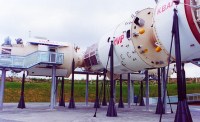
Cite De L'espace
This theme park in Toulouse has its head firmly in the clouds, dedicating its 8.6 acres (3.5 hectares) to celebrating flight and outer space. Children will love exploring full-scale models of rockets and space stations, and teens will enjoy the feeling of anti-gravity in the Gyro simulator. There's a moon-walk simulator; and the enormous planetarium, IMAX theatre, and Terradome show educational films about space flight and the history of the universe. The park is located on the outskirts of the city, and is a great activity for the whole family. Visitors will need a full day to explore the whole site and there are guided tours and audio guides available. There is a restaurant at the park, and a shop which sells a variety of fun, educational books, movies and toys.
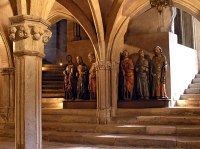
St Sernin Basilica
Of the many beautiful buildings in Toulouse, the St Sernin Basilica is one that should not be missed. The church, built from the region's distinctive rose-coloured bricks, is the largest Romanesque church in Europe and contains many beautiful frescoes and sculptures. The Basilica was built around 1100, and contains many relics, as well as the graves of Saint Sernin and Saint Honoratus.
Saint Sernin was the first Bishop of Toulouse and was martyred in the year 250; it is largely due to his remains in the crypt that the basilica is an essential stop on the pilgrimage of Saint Jacques de Compostela, which culminates in Arles. There are also some 19th-century treasures on display for visitors, including chalices and ciborium.
The main attraction, however, is the building itself, which is astounding in its size and design and quite unlike most churches found in France. The mix of architectural styles from different centuries is what makes it feel so original. There are free guided tours of the basilica on weekends but they are conducted in French only. Although entrance to the main area of the church is free, visitors will have to pay small amounts to enter certain areas.
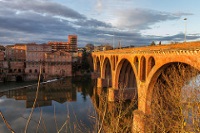
Albi
While Toulouse is known as the 'pink city' for its facebrick buildings, Albi, a UNESCO heritage site and historical city, is often called the 'red city' due to the spectacular crimson hue of the buildings at sunset. With a skyline dominated by the magnificent Cathédrale Ste-Cécile, there is plenty to see in the medieval town centre. Just wandering around the picturesque and ancient streets of the old city is the main attraction.
Albi is also known as the birthplace of famous French painter Toulouse-Lautrec, and there is a great museum containing more than 600 of his works, along with those of Degas, Matisse, and Roualt. There is also an interesting museum dedicated to explorer Jean-François de la Pérouse. The Cloitre de la Collegiale Saint Salvy is also a lovely, serene religious site to visit in Albi. And the Park Rochegude is a small but beautiful park, formerly the garden of an aristocrat, which boasts a wonderful collection of trees.
Situated on the lovely River Tarn, this historic city is a popular excursion from Toulouse. Albi is only an hour or so away from Toulouse by car, so easily reached on daytrips.
Getting Around
Downtown Toulouse is fairly flat and compact, so visitors can comfortably see most sights on foot or by bicycle. Longer journeys can be conquered with the city's public transport, which includes bus, tram and metro lines throughout the city. There are also free shuttle buses circling the historic city centre, which can be hailed. Taxis must be pre-booked; driving in the city can be frustrating as parking is extremely limited, and hiring a car is not recommended unless for excursions outside of town.
Toulouse Climate and Weather
Toulouse has a temperate climate, and enjoys moderate, sunny weather for most of the year. Summers (June through August) have the hottest temperatures, averaging around 68F (20C), although the mercury can climb as high as 85F (30C). Summers tend to be humid, though there is little rainfall, and around 250 hours of sunshine per month. Winters (December to February) are fairly mild, with January temperatures averaging 42F (5C) and dipping as low as 36F (2C). Snowfall is rare, but winters in Toulouse tend to be wet, with up to 10 days of rain per month. The best time to visit Toulouse is in the late spring or early autumn, when the weather is generally warm and sunny.
France travel info
Electricity
The electrical current is 230 volts, 50Hz. European two-pin plugs are standard.
Language
French is the official language.
Money
The euro (EUR) is the official currency in France. Currency can be exchanged at banks, bureaux de change and some large hotels, though visitors will get a better exchange rate at the ATMs. Major credit cards are widely accepted, particularly in major tourist destinations. Foreign currency is not accepted.
Tipping
Most restaurants and hotels automatically add a 15 percent service charge so a tip is not necessary, although another two to three percent is customary if the service has been good. If service is not included then 15 percent is customary. Taxi drivers expect 10 to 15 percent of the fare, and hairdressers about 10 percent. Hotel staff generally receive about €1.50 a day and tips of about €1 are given to washroom and cloakroom attendants and museum tour guides. Tour bus drivers and guides are also tipped.
Health
No particular vaccinations or medications are required for travel to France. The prevalence of certain tick-borne infections, such as lyme disease, tularemia, tick-borne encephalitis, and rickettsial diseases, mean that travellers should take precautions against ticks if they are travelling in rural or forested areas in warm weather. French hospitals and health facilities are first class. Visitors from other EU countries are entitled to discounted medical treatment and medicines on presentation of a European Health Insurance Card (EHIC). After Brexit, the Global Health Insurance Card (GHIC) replaced the European Health Insurance Card (EHIC) for UK citizens. The GHIC allows UK citizens access to state healthcare during visits to the EU. The GHIC is not valid in Norway, Iceland, Liechtenstein or Switzerland, nor is it an alternative to travel insurance. Otherwise, doctors and hospitals often expect immediate cash payment for health services, so medical insurance is advised.
Safety
While violent crime against tourists is rare and holidays in France are generally trouble-free, visitors should be mindful that security has been heightened following a series of terrorist attacks in recent years, particularly in the transport sector. Unattended luggage left in public places will be removed or destroyed by security staff. While generally safe, visitors to France are advised to take precautions against petty theft and to ensure their personal safety. Thieves and pickpockets operate on the metro and around airports. Theft from cars is prevalent, particularly in the south, around Marseilles, and in Corsica. Tourists are advised to conceal bags and purses even when driving, and to never leave valuables unattended in the car. Bag snatching is also common, particularly on public transport and in shopping centres, and visitors should also be vigilant of luggage while loading bags into and out of hire cars at airports.
Local customs
French culture is of paramount importance to the French people. In an increasingly Americanised world they feel duty-bound to protect it, and it is appreciated if visitors can speak a few words of French. Locals do not respond well to being shouted at in English. While the food is second to none, foreigners may find the service in many restaurants sloppy. Waiters can appear rude (particularly in Paris) and take their time. This is just the way they are. Traditional games such as pétanque (similar to lawn bowling but played on gravel) are popular in village squares, but the national sports are football, rugby and cycling. Smoking in public places is not allowed and will incur heavy fines.
Doing business
Business etiquette is important in France. A smart, fashionable sense of dress is common as the nation prides itself on haut couture. Punctuality is not always observed though and the 'fashionably late' tactic may be applied. A handshake is the common form of greeting for men and women upon first introductions. Titles are important and the person is to be referred to as 'monsieur' (Mr.), 'madame' (Mrs.), or 'mademoiselle' (Ms.). Meetings usually occur over lunches, and the French are known to enjoy food. Business hours are generally 9am to 6pm, Monday to Friday.
Duty free
Travellers from non-EU countries over 17 years of age entering France can bring in the following items duty-free: 200 cigarettes, or 100 cigarillos, or 50 cigars, or 250g tobacco. Four litres of wine and 16 litres of beer and one litre of spirits over 22 percent or two litres of alcoholic beverages less than 22 percent. Other goods up to the value of €430 for air and sea travellers, and €300 for other travellers (reduced to €175 for children under 15 years of age).
Communications
The international access code for France is +33. Travellers can purchase local prepaid SIM cards for unlocked phones or use eSIMs if their cellular providers support it on their networks. Free WiFi is available in most hotels, cafes, restaurants and similar establishments.
Passport & Visa
The borderless region known as the Schengen Area includes the following countries: Austria, Belgium, Czech Republic, Denmark, Estonia, Finland, France, Germany, Greece, Hungary, Iceland, Italy, Latvia, Lithuania, Luxembourg, Malta, The Netherlands, Norway, Poland, Portugal, Slovakia, Slovenia, Spain, Sweden, and Switzerland. All these countries issue a standard Schengen visa that has a multiple entry option, and which allows the holder to travel freely within the borders of all the aforementioned countries.
Additionally, travellers must hold sufficient funds to cover their stay in France, and proof of repatriation (a return or onward ticket, and the necessary travel documentation for their next destination). Note that Schengen visas, if required, are also valid for French Guiana and French West Indies and Reunion, provided that the Schengen visa is endorsed "Also valid for French territories being in observation of the respective French territories". We recommend that passports always be valid for six months after intended period of travel.
Entry requirements
US citizens must have a passport that is valid for at least three months after their intended departure from France (and issued within the last 10 years). No visa is required for a stay of up to 90 days within a 180-day period.
UK citizens must have a passport that is valid for at least three months after their intended departure from France (and issued within the last 10 years). No visa is required for a stay of up to 90 days within a 180-day period.
Canadian citizens must have a passport that is valid for at least three months after their intended departure from France (and issued within the last 10 years). No visa is required for a stay of up to 90 days within a 180-day period.
Australian citizens must have a passport that is valid for at least three months after their intended departure from France (and issued within the last 10 years). No visa is required for a stay of up to 90 days within a 180-day period.
South African citizens must have a passport that is valid for at least three months after their intended departure from France and must obtain a valid Schengen visa prior to travel. Passports must have at least two blank pages. Entry and transit may be refused to holders of temporary passports.
Irish citizens must have a passport that is valid on arrival. No visa is required.
New Zealand citizens must have a passport that is valid for at least three months after their intended departure from France (and issued within the last 10 years). No visa is required for a stay of up to 90 days within a 180-day period.
Useful contacts
Maison de la France (Tourist Information Agency), Paris: www.france.fr/fr
112 (General emergency)