

Country guides
 South & Central America
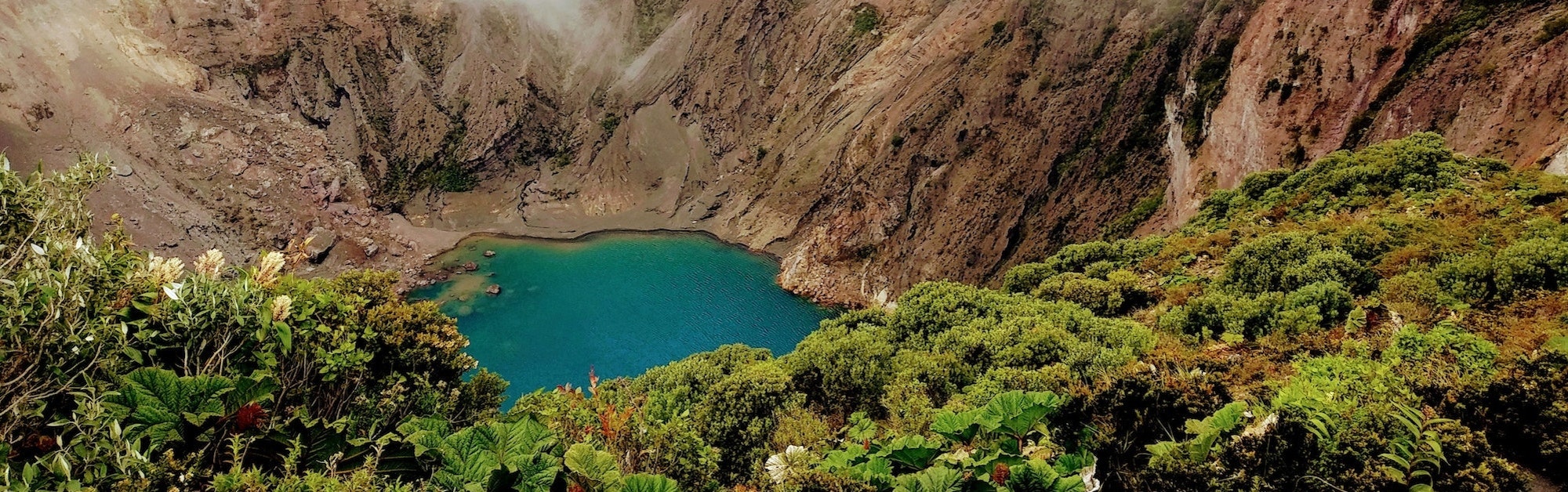
When it comes to natural wonders, few countries rival what Costa Rica offers. Travellers can explore scenic volcanic landscapes in Arenal Volcano National Park (though Arenal has been dormant since 2010), stroll through the unique cloud forests of Monteverde on the world-famous Sky Walk, dive into the vibrant Caribbean waters of Cahuita National Park, or go white-water rafting through the thrilling canyons of the Río Toro or Tenorio River.
Costa Rica is home to approximately five percent of the world's biodiversity, packed into just 0.03 percent of the planet's landmass. With more than 25 percent of its territory protected in national parks and reserves, wildlife sightings are a major draw. Visitors can spot sloths, howler and spider monkeys, and marvel at the brightly coloured frogs, snakes, and butterflies that thrive in this natural paradise. Thousands of people flock to Tortuguero National Park each year to witness green sea turtles nesting and hatching on the beach.
While Costa Rica's natural landscapes tend to overshadow its cities, the towns offer plenty of charm. Jaco, on the Pacific coast, is known for its surf and nightlife, while the laid-back Puerto Viejo de Talamanca, on the Caribbean side, offers reggae rhythms and pristine beaches. The capital, San José, though often overlooked, is a lively urban hub with a growing food scene, eclectic shopping, and vibrant nightlife.
Best time to visit Costa Rica
Costa Rica has a tropical climate, which means that its seasons are not distinct and there's little variation in temperature throughout the year. The peak tourist season in Costa Rica is between November and April but it's a popular year-round holiday destination.
What to see in Costa Rica
-Visit the artistic community and biological richness of Monteverde, with its world-renowned cloud forest.
-Take a guided night tour in the La Fortuna area to learn about the geology and wildlife surrounding dormant Volcán Arenal.
-Relax on Caribbean beaches such as Playa Chiquita and Punta Uva, known for their calm waters and natural beauty.
-Explore the bustling market of Puerto Limon, experiencing Afro-Caribbean culture and cuisine.
What to do in Costa Rica
-Take a horseback tour across the Continental Divide or volcanic foothills near Arenal or Monteverde.
-
-Soak in the Río Negro hot springs near Liberia or explore the many geothermal spas near La Fortuna.
-Go white-water rafting on rivers such as the Río Toro, Pacuare, or Tenorio, known for their thrilling rapids and jungle views.
-Zip-line through the jungle canopy in destinations such as Manuel Antonio National Park or Monteverde, some of the best canopy tours in the Americas.
Getting to Costa Rica
There are direct flights to Costa Rica from Fort Lauderdale and New York in the US, but there are currently no direct flights from the UK to Costa Rica. However, there are plenty of cheap indirect flights to Costa Rica from the UK, connecting through other European cities. Flights land in Daniel Oduber International Airport in Liberia, and San Jose Juan Santamaria Airport, outside of San Jose.
Read
Marcos Ramirez by Carlos Luis Fallas, and Monkeys are Made of Chocolate by Jack Ewing.
Listen
Luis Angel Castro and Debi Nova.
Watch
The Blue Butterfly (2004), and Caribe (2004).
Drink
Guaro (rum) and Costa Rican coffee.
Eat
Ceviche (marinated seafood with lime, cilantro, and vegetables, especially popular on the coasts) and casado (a traditional dish with rice, beans, plantains, salad, and meat or fish).
What to buy
Hand-carved wooden crafts and coconut-based souvenirs, available in markets and artisan shops.
What to pack
Plenty of sunscreen and insect repellent.
Did you know?
-Costa Rica has five officially active volcanoes: Arenal, Poás, Irazú, Turrialba, and Rincón de la Vieja, among over 100 volcanic formations.
-Locals refer to themselves as Ticos (men) and Ticas (women).
-A 'soda' is a small, informal local restaurant offering affordable, homemade Costa Rican meals.
-Life expectancy in Costa Rica is about 79 years, one of the highest in Latin America, thanks in part to universal healthcare and a strong social safety net.
A final word
With its unmatched ecological diversity, lush rainforests, volcanoes, and two spectacular coastlines, Costa Rica is a dream destination for eco-tourists and adventure seekers alike. Add to that its warm-hearted people, relaxing beaches, and pura vida lifestyle, and visitors have the perfect place for both exploration and relaxation.
Things to do in Costa Rica
Costa Rica's wealth of attractions will enchant even the most jaded of travellers, with stunning national parks, wildlife refuges and biological reserves accounting for no less than 25 percent of the land. Adventurous visitors can be assured of many opportunities for world-class surfing, kayaking, hiking, fishing, white water rafting, canyoning, climbing, and zip-lining, and those inclined to relax will find sun-tanning, swimming, and snorkeling galore on the destination's beautiful beaches.
The northwest region of Costa Rica is famous for two spectacular national parks: the Arenal Volcano National Park, with the active Volcan Arenal at its heart, and the world-renowned Monteverde Cloud Forest Biological Reserve, a unique and awe-inspiring wilderness area that dazzles visitors with its mystical atmosphere. Fortuna is a good base from which to explore the region, and a visit to the Monteverde community, spread in the hills of the cloud forest, is a fascinating excursion.
The Pacific coast is well developed for tourism and is scattered with picturesque villages and great beaches. Jaco is a beach resort town that is perfect for surfing, sunning, and partying.
Puntarenas, the largest town in the region and a popular stop for cruises, is also a good base for exploring the area. The Manuel Antonio National Park is the most celebrated reserve of the region and, here, travellers will find a captivating variety of wildlife, as well as the chance to enjoy numerous adventure activities.
The Caribbean coast of Costa Rica is becoming increasingly popular, thanks to its more relaxed atmosphere and less-developed infrastructure for tourism. It exists as a beach haven, its local communities generally friendly towards tourists. Puerto Limon is a bit rundown, but receives regular cruise passengers and acts as a doorway into the stunning coastal areas and pristine rainforests of Caribbean Costa Rica.
Puerto Viejo de Talamanca is a popular tourist destination nestled on the coast. The best parks in this area are the Cahuita National Park, which protects a wondrous coral reef and is a treat for divers and snorkellers, and the Tortuguero National Park in the north, a famous breeding ground for sea turtles.
San Jose sits in the middle of this natural wonderland of a country, and is a lively and modern city with good shopping, restaurants and nightlife. It has some architecturally beautiful colonial areas and a few great museums. From this urban centre, visitors will find a magnificent list of things to see and do in Costa Rica.
Costa Rica travel info
Electricity
Costa Rica uses 120 volts at a frequency of 60Hz. Power outlets typically accommodate Type A (flat two-pin plugs) and Type B (three-pin plugs with two flat blades and a round grounding pin), the same as in North America.
Language
Spanish is the official language. English is widely spoken in tourist areas, hotels, and larger cities, but less commonly understood in rural regions.
Money
The Costa Rican colon (CRC) is divided into 100 centimos and is the official currency, although US dollars are also widely accepted. US dollars can be exchanged in banks and many hotels, but currency other than US dollars is difficult to exchange. Using black market exchange options is risky, as these unofficial outlets have been known to pass on counterfeit bills printed in Colombia. Banks close anywhere from 3pm to 4pm. Major credit cards are widely accepted. ATMs are available in major towns throughout the country, but it's advisable to always have some local cash handy.
Tipping
A 10 percent service charge is usually included in restaurant bills and, if service is particularly good, leaving an additional five to 10 percent tip is appreciated but not required. Hotels may not automatically include service charges; tipping bellhops and housekeeping staff with small amounts (around $1 to 2) is customary. Tipping taxi drivers is not expected, but rounding up the fare is common practice. Tour guides typically receive a tip of five to 10 percent of the tour price.
Health
Routine vaccinations are recommended, including hepatitis A, hepatitis B, and typhoid, and yellow fever vaccination certificate is required for those arriving from a country where yellow fever is present. The malaria risk is minimal and confined to a few low-lying regions; visitors should consult a travel health professional for the latest advice.
Mosquito-borne illnesses such as dengue fever, Zika, and chikungunya occur, particularly during the rainy season (May to November). Preventative measures include using insect repellent and wearing long sleeves.
Tap water is generally safe to drink in cities, but bottled water is advised in rural or remote areas. Healthcare services in urban areas are modern and reliable, with high standards of hygiene and care.
Safety
Costa Rica is considered one of the safest countries in Central America, but petty crime such as pickpocketing and theft from vehicles can occur, especially in San José, at airports and on public transportation.
Visitors should be cautious with belongings, avoid displaying valuables, and use official taxis or registered transportation. They should also avoid changing money on the street.
Protests and road blockades can occur with little notice, particularly on routes between San José and the coasts. It's best to monitor local news and plan travel accordingly.
Local customs
Costa Ricans, known as 'Ticos', are friendly, polite and family-oriented. Traditional gender roles remain influential, though society is gradually becoming more progressive. The population is largely mestizo and Catholic, though religious and ethnic diversity is growing. A conservative attitude prevails in social and business settings, with emphasis on courtesy and formality.
Doing business
Business culture in Costa Rica is formal, and professional dress, punctuality and scheduled appointments are expected. Regarding language, many professionals speak English but Spanish is the primary means of communication, so having business cards and promotional materials in both languages is considered respectful.
Business practices may move at a slower pace than some visitors are accustomed to, as Costa Ricans tend to be risk-averse and methodical in decision-making. Women increasingly hold leadership roles, but the business environment remains somewhat male-dominated. Visiting businesswomen are treated with courtesy and professionalism once their authority is established. Typical business hours are 8am to 4pm, Monday to Friday, with a long lunch break around 12 to 2pm.
Duty free
Travellers to Costa Rica over 18 years do not have to pay duty on 3 litres of alcohol; 500g of tobacco or 400 cigarettes or 50 cigars. Perfume for personal use is allowed provided it is a reasonable quantity.
Communications
The international access code for Costa Rica is +506. Costa Rica has one of the most advanced telecommunications systems in Latin America and WiFi is available in most hotels, restaurants, and cafes.
Passport & Visa
All foreign visitors must present a return or onward ticket, valid travel documents for their next destination, and proof of sufficient funds for their stay. A yellow fever vaccination certificate is required only for those arriving from a high-risk country, excluding Argentina and Panama, or from Tanzania or Zambia.
Although entry requirements vary by nationality, travellers are advised to have at least six months' passport validity beyond their departure date, even if shorter validity is technically permitted. Immigration officials may apply entry rules differently than airline or travel agents advise, so it's best to confirm the latest official guidance.
Entry requirements
US citizens must have a passport that is valid for the duration of their stay in Costa Rica, but do not need a visa for stays of up to 180 days.
British citizens must have a passport that is valid for at least six months after their date of departure, but can visit Costa Rica without a visa for up to 180 days under a tourist visa waiver. The exact period is at the discretion of the immigration officer on arrival.
Canadian citizens must have a passport that is valid for the duration of their stay in Costa Rica. A visa is not require for stays of up to 180 days. The immigration officer will determine the permitted length of their stay when they enter Costa Rica.
Australian citizens must have a passport that is valid for at least six months after their date of departure, but can visit Costa Rica without a visa for up to 90 days.
South African citizens must have a passport that is valid upon their arrival in Costa Rica. No visa is required for stays of up to 90 days.
Irish citizens must have a passport that is valid upon their arrival in Costa Rica. No visa is required for stays of up to 90 days.
New Zealand citizens must have a passport that is valid upon their arrival in Costa Rica. No visa is required for stays of up to 90 days.
Useful contacts
Costa Rica Tourism Board, San Jose: www.visitcostarica.com
911 (General Emergency Helpline)Climate in Costa Rica
Costa Rica has a tropical climate with two main seasons. The dry season runs from December to April, and the rainy season from May to November, with temperatures remaining fairly consistent throughout the year. On the coast, temperatures average between 27°C (81°F) and 32°C (89°F), often cooled by sea breezes; the highlands are milder, with warm days and cooler nights.
Rain is heaviest in September and October, while the dry season brings clear skies and minimal rainfall, making it the most popular time for tourism. However, the rainy season, often called the 'green season', offers lush landscapes, fewer crowds and lower prices. Mornings during this time are typically sunny, with showers in the afternoon.
There's no winter in Costa Rica, and sunshine is common year-round, making it a reliable destination at any time. For those looking to avoid peak crowds, visiting in the shoulder months of May or late November is a great option.