

City guides
 Dominican Republic
Things to do in Amber Coast
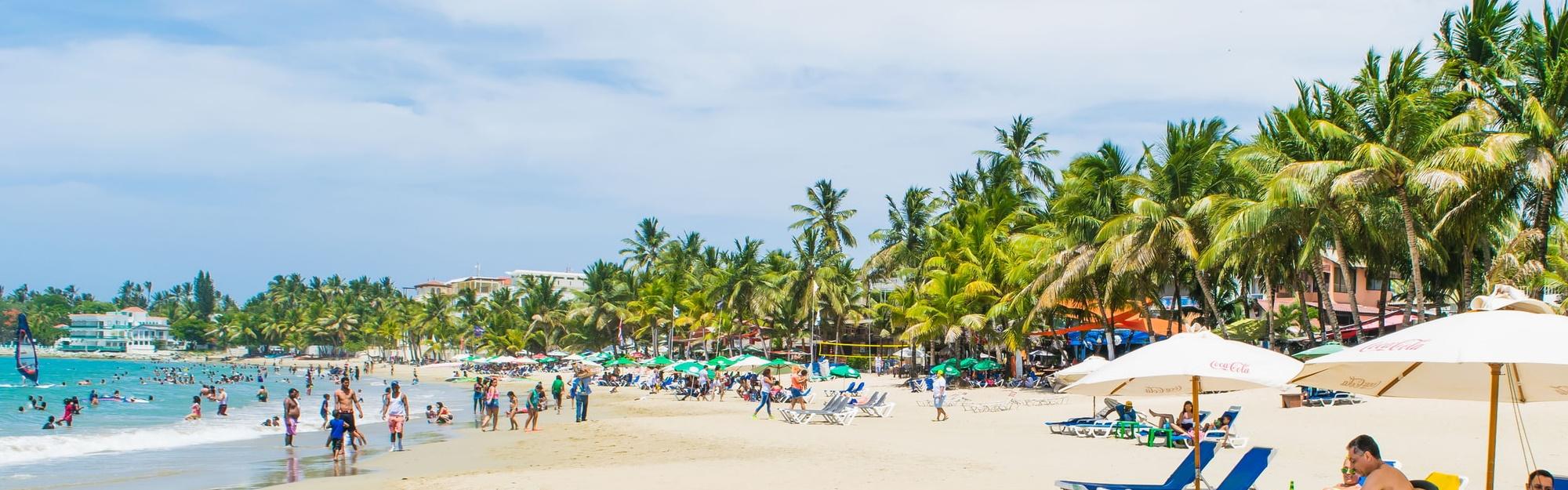
The Dominican Republic's north coast is very popular with tourists and adventure seekers of all kinds. A trip to the Amber Coast offers visitors a unique blend of local Dominican flavour and exciting activities for the whole family. Highlights include the Amber Museum in Puerto Plata, which showcases the country's precious amber, and the city's distinctive colonial and Victorian architecture. Visitors should also enjoy the beautiful beaches lining the coast.
However, the Amber Coast isn't just about beaches, as nearby Mount Isabel de Torres can be climbed with a guide or reached by cable car, and provides stunning views of Puerto Plata and the coastline. Excursions from Puerto Plata may include a visit to the Samaná Peninsula, known for its remote beaches and natural beauty, or a lively safari tour through the island's less touristy areas aboard colourful vehicles.
Adventure options on the north coast are abundant, with resorts offering diving, jet skiing, beach horseback riding, cultural tours, and visits to historic sites such as Fortaleza San Felipe.
Cabarete
Cabarete, a laid-back seaside town on the Dominican Republic's north coast, is often considered the kitesurfing and windsurfing capital of the Caribbean. Since the late 1980s, it h…
Cabarete
Cabarete, a laid-back seaside town on the Dominican Republic's north coast, is often considered the kitesurfing and windsurfing capital of the Caribbean. Since the late 1980s, it has hosted international competitions and drawn adventure-seekers to its sunny shores. Younger travellers are especially drawn to its active vibe, with plenty of water sports and a buzzing beachside bar and restaurant scene. In addition to world-class kitesurfing, local tour operators offer hiking, surfing, canyoning, horseback riding, and mountain biking in the surrounding natural areas.
Amber Museum
An attractive Victorian building in the centre of Puerto Plata on Duarte Street houses the Amber Museum, which showcases a unique collection of valuable Dominican amber. According …
Amber Museum
An attractive Victorian building in the centre of Puerto Plata on Duarte Street houses the Amber Museum, which showcases a unique collection of valuable Dominican amber. According to experts, the amber found in this region is the most transparent, and therefore the most valued, in the world. Classified as a semi-precious stone, the substance is actually tree resin that has hardened across millennia, often enclosing fossils of plant and insect life. The museum offers guided tours in several languages, and has a shop where a full selection of Dominican amber jewellery can be purchased.
Website www.ambermuseum.com
Mount Isabel de Torres
Towering over the city of Puerto Plata, Mount Isabel de Torres rises 2,600 feet (793m) above sea level and is a popular tourist attraction. Visitors can take a scenic seven-minute …
Mount Isabel de Torres
Towering over the city of Puerto Plata, Mount Isabel de Torres rises 2,600 feet (793m) above sea level and is a popular tourist attraction. Visitors can take a scenic seven-minute cable car ride, the only one in the Caribbean, to reach the summit. At the top, a botanical garden showcases a rich variety of tropical plants, and a statue of Christ the Redeemer, inspired by the one in Rio de Janeiro, stands overlooking the city. Dining options vary; visitors can enjoy spectacular views of the coastline and surrounding landscape from several scenic viewpoints.
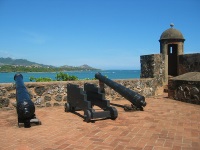
Fuerte San Felipe
Fuerte San Felipe is the only remaining structure from Puerto Plata's Spanish Colonial era. Built between 1540 and 1577 to protect the harbour from pirates and foreign invaders, th…
Fuerte San Felipe
Fuerte San Felipe is the only remaining structure from Puerto Plata's Spanish Colonial era. Built between 1540 and 1577 to protect the harbour from pirates and foreign invaders, the stone fort features a moat and now houses a small museum displaying colonial artefacts and historical exhibits. Although it was never the site of a major battle, the fort served as a military post and later as a prison. To the east lies the Malecón, a scenic oceanfront promenade lined with cafés and street vendors. It remains a popular place for strolling and enjoying views of the Atlantic coast.
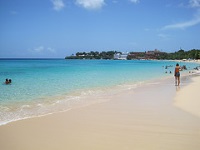
Sosua
To the east of Puerto Plata lies the holiday destination of Sosúa, a small town with a cosmopolitan character. Visitors will find a scenic crescent-shaped beach and a variety of c…
Sosua
To the east of Puerto Plata lies the holiday destination of Sosúa, a small town with a cosmopolitan character. Visitors will find a scenic crescent-shaped beach and a variety of cafés, bars and restaurants. The town was established by a group of around 600 Jewish refugees who fled Europe in 1940 and settled here under an agreement with the Dominican government. They founded the dairy industry for which the area became known, and their legacy lives on. The original synagogue they built still stands and now includes a museum dedicated to the history of Sosúa's Jewish community.
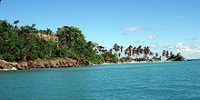
Samana Peninsula
Jutting into the Atlantic from the northeast coast of the Dominican Republic, the Samaná Peninsula is a remote, unspoilt region known for its white-sand beaches, swaying palm fore…
Samana Peninsula
Jutting into the Atlantic from the northeast coast of the Dominican Republic, the Samaná Peninsula is a remote, unspoilt region known for its white-sand beaches, swaying palm forests and clear, calm waters. Colourful fishing villages and small towns dot the coastline, while winding roads lead through lush mountains and past cool waterfalls. The pace is slow, the views are spectacular, and nature takes centre stage. From January to March, the peninsula becomes a prime spot for whale watching, as humpback whales arrive in the warm waters to mate and give birth just offshore.
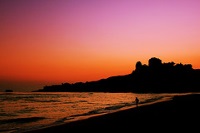
Puerto Plata
Puerto Plata, capital of the province by the same name, sits on the north coast of the Dominican Republic and serves as the gateway to the region's beach towns and resorts. Its sho…
Puerto Plata
Puerto Plata, capital of the province by the same name, sits on the north coast of the Dominican Republic and serves as the gateway to the region's beach towns and resorts. Its shoreline is flanked by lush valleys and backed by the majestic Mount Isabel de Torres. Christopher Columbus reportedly called the area extraordinarily beautiful in 1492 and named it Puerto Plata, or 'Silver Port', for its shimmering coastline. The city also has a romantic air of a bygone era, reflected in its Victorian architecture. Filigree-lace wood panels, wrought ironwork and pastel-painted 'gingerbread' homes characterise many historic buildings in town.