

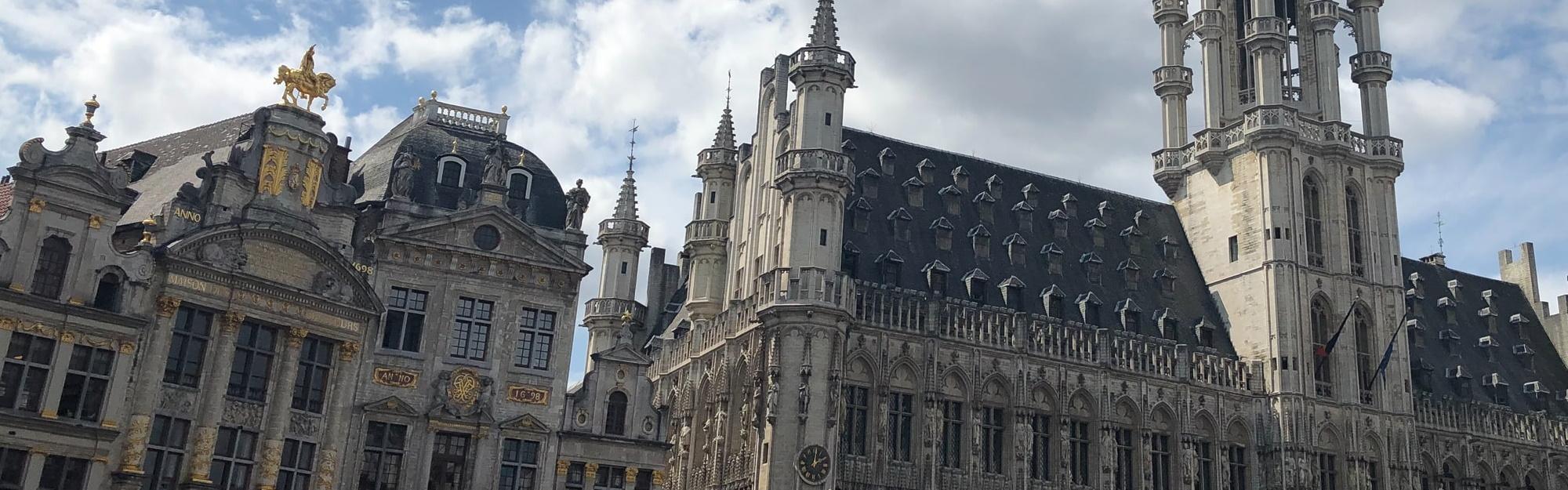

Belgium travel info
Electricity
The electrical current in Belgium is 230 volts, 50Hz. Types C and E plugs are the official standards, though Type F plugs can also be used.
Language
Flanders in the north speaks Dutch (locally called Flemish) and Wallonia in the south speaks French. Brussels is bilingual with a French-speaking majority; a small German-speaking community lives in the east. English is widely understood but not official.
Money
The Belgian currency is the euro (EUR). International credit cards are widely accepted, though small shops may prefer cash. ATMs are common in towns and cities. Banks are usually open Monday to Friday, 9am to 5.30pm, sometimes closing for lunch, and are closed on weekends and holidays. Apple Pay and Google Pay are widely usable at contactless terminals in larger shops, restaurants, and urban areas, but not every small merchant accepts them, so it's advisable to carry a backup card or some cash.
Tipping
Service is included in bills in Belgium. Tipping is optional and usually only given for exceptional service or as a small gesture.
Health
Travellers are encouraged to be up to date with routine vaccines. Medical care in Belgium is excellent but can be costly, so it's a good idea to have travel insurance. UK citizens should carry a Global Health Insurance Card (GHIC), which replaced the European Health Insurance Card (EHIC), to access state healthcare during visits to the EU. The GHIC is not valid in Norway, Iceland, Liechtenstein, or Switzerland and does not replace travel insurance.
Safety
Most visits to Belgium are trouble-free, but travellers should take care with their belongings in cities, particularly around Brussels' main train stations and on public transport. Brussels hosts several international organisations, including the EU and NATO, so visitors are advised to remain aware of their surroundings and follow local security guidance.
Local customs
In French-speaking areas of Belgium, young locals may greet friends with cheek kisses rather than handshakes, with the number of kisses varying by region. Visitors are best advised to follow the local's lead. Everyone in Belgium is expected to carry an official form of identification, and possession or trafficking of drugs is treated as a serious offence.
Doing business
Belgians are very formal in business and have a keen sense of style. dress should be conservative. Conservative yet stylish suits are recommended for men; women should opt for stylish business suits, or dresses and blouses.
Punctuality is extremely important at meetings, which will begin and end with a quick, light handshake. It is standard practice that all involved exchange business cards, and it is recommended that cards are printed in English, with the other side translated in either French or Dutch, depending on the main language of the region where business is to take place.
Visiting business people should research beforehand whether a business is French or Dutch-speaking. Compromise is very important in Belgian business culture and may be required as a show of friendship. Business hours are generally 9am to 5pm.
Duty free
Travellers arriving in Belgium from outside the EU may bring limited quantities of tobacco, alcohol and other personal goods without customs duty. Typical duty‑free limits include up to 200 cigarettes (or equivalent tobacco products), 4 litres of wine, 16 litres of beer, and either 1 litre of spirits over 22 percent alcohol or 2 litres of beverages up to 22 percent alcohol, along with other personal items up to about €430 in value for air and sea travellers. Importing unprocessed meat, most dairy products and other prohibited items from non‑EU countries is not permitted.
Communications
The international dialing code for Belgium is +32. Free WiFi is widely available in hotels, cafes, and restaurants. Since international roaming can be costly, purchasing a local prepaid SIM card is often a more affordable option.
Passport & Visa
The Schengen area is a borderless travel zone made up of 26 European countries, including Belgium, that share a common short‑stay visa system. A standard Schengen visa generally allows its holder to travel freely within all Schengen states for short stays. Nationals of non‑EU countries may be asked to show return or onward tickets, evidence of sufficient funds, and other supporting documents at the border. For entry, passports typically need to be valid for at least three months beyond the planned departure from the Schengen area.
Entry requirements
US nationals must have a passport that is valid for at least three months beyond the period of intended stay. A visa is not required for stays of up to 90 days.
UK nationals must have a passport that is valid for at least three months beyond the period of intended stay. A visa is not required for stays of up to 90 days.
Canadian nationals must have a passport that is valid for at least three months beyond the period of intended stay. A visa is not required for stays of up to 90 days.
Australian nationals must have a passport that is valid for at least three months beyond the period of intended stay. A visa is not required for stays of up to 90 days.
South African nationals must have a passport that meets Belgian entry requirements. A Schengen short-stay visa must be obtained before travel.
Irish nationals must have a valid passport for the duration of their stay. No visa is required.
New Zealand nationals must have a passport that is valid for at least three months beyond the period of intended stay. A visa is not required for stays of up to 90 days.
Useful contacts
Belgian Tourist and Information Office, Brussels: visitbelgium.com
112 (Fire, Rescue and Medical), 101 (Police)