

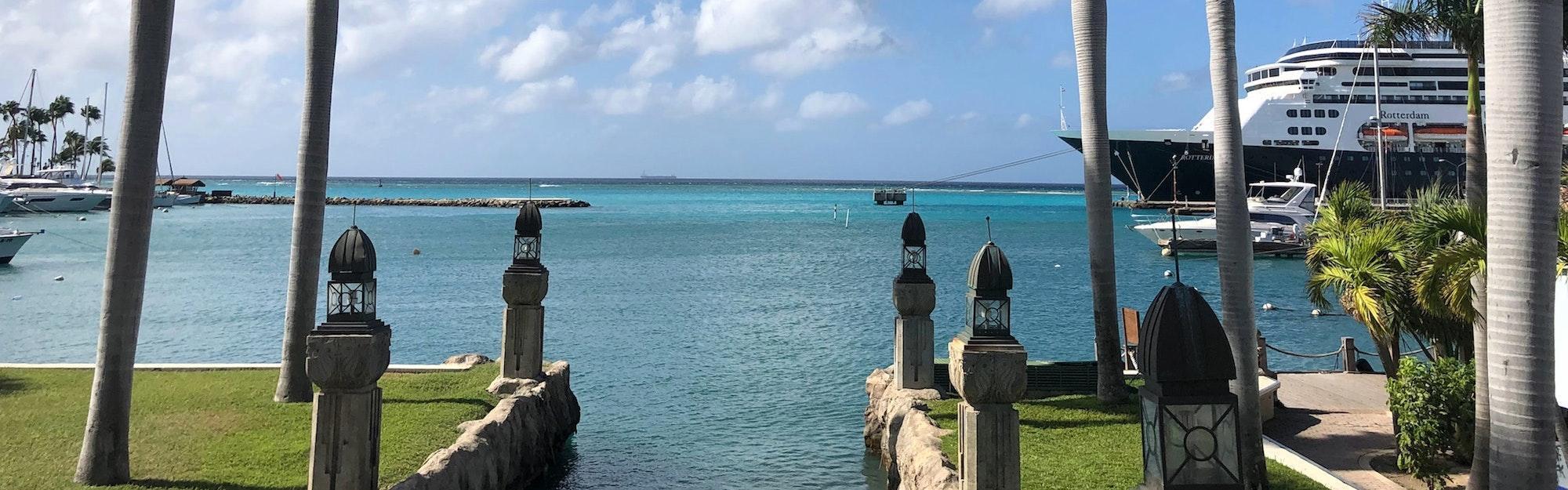

Aruba travel info
Electricity
Aruba uses a 127-volt, 60Hz electrical system, with standard North American-style flat two- and three-pin plugs.
Language
The official languages of Aruba are Dutch and Papiamento, the island's native language. English and Spanish are widely spoken, as both are taught in schools. Some French is also understood, particularly in tourist areas.
Money
The official currency of Aruba is the Aruban Florin (AWG), which is generally tied to the US Dollar at a fixed rate of about 1 USD = 1.80 AWG. US Dollars are widely accepted throughout the island, and other major currencies can be exchanged at banks. Credit and debit cards, as well as Apple Pay and Google Pay, are commonly accepted in most tourist areas, larger businesses, and resorts. However, in more local or remote areas, smaller shops and vendors may not accept mobile payments, so it's always a good idea to carry cash or a card for these situations. ATMs are available in Oranjestad and across the island for easy access to cash.
Tipping
A 10 to 15 percent service charge is often included in restaurant, bar and room service bills in Aruba, but it's still nice to leave an extra tip (usually 10 to 20 percent) for good service. There's a 12.5 percent room tax on hotel bills. Taxis are typically tipped around 15 percent, and porters usually expect about $1 per bag.
Health
There are no special health requirements for visitors to Aruba, but travellers coming from yellow fever-endemic countries will need to show proof of vaccination. Aruba has had occasional cases of dengue fever, which is spread by mosquitoes; it's recommended that visitors use insect repellent to stay safe. Medical care in Aruba is good, with one main hospital and several clinics across the island. It's recommended that travellers have health insurance, but food and water are safe to consume.
Safety
Crime isn't a major issue in Aruba, and most visitors have a trouble-free experience. However, it's still a good idea for them to take basic precautions, like locking valuables in the hotel safe and being cautious when walking at night. Visitors should also be aware that the ocean currents can be strong, particularly on the northern side of the island, so it's recommended to avoid swimming there.
Local customs
Arubans are known for being friendly and welcoming, but it's important for visitors to respect the local culture. One thing to remember is the island's slower pace, so it's good to be patient and adjust to 'island time'. Topless sunbathing isn't allowed in public areas, though some private resorts may have different rules.
When it comes to dress code, swimwear is fine on the beach, but visitors should cover up when heading to restaurants or shops. Resort wear such as a cover-up or casual shirt is common around the island. While Dutch is the official language, most people speak English and Spanish, so communication is easy. Learning a few words in Papiamento, such as 'Bon dia' (Good morning) or 'Danki' (Thank you), is always appreciated. Finally, Aruba's natural beauty is a big draw, so it's important to avoid littering and to respect the environment.
Doing business
Oranjestad is the main business hub in Aruba, and there's a growing focus on international financial services. While Dutch is the official language, English is commonly used in business settings. Meetings are typically held in formal environments, such as offices or conference centres, and punctuality is expected. Handshaking is the standard greeting for both men and women, and female business associates are treated with equal respect, often holding high positions. Business hours are generally from 9am to 5pm.
Duty free
Travellers to Aruba do not need to pay customs duty on 200 cigarettes or 25 cigars, one litre of alcohol, and gift articles to the value of AWG 900.
Communications
The international dialling code for Aruba is +297. Visitors with unlocked phones can purchase local SIM cards, and most of the destination's resorts and hotels offer WiFi, as do many cafés and restaurants.
Passport & Visa
All passports must be valid for the period of the intended stay. It's recommended in some cases that travellers have at least six months' validity beyond their travel dates. Visitors to Aruba must hold sufficient funds, a return or onward ticket, and any documents required for their next destination. Under the Western Hemisphere Travel Initiative (WHTI), travellers between the United States and Canada, Mexico, Bermuda, and the Caribbean must present a passport or other acceptable identity/citizenship document when entering or re‑entering the US. Most nationalities can stay in Aruba for 30 days as tourists, with the possibility of extending stays up to 180 days per calendar year under certain conditions.
Entry requirements
United States passport holders must have a passport that's valid for the period of intended stay. A visa is not required. The standard length of stay is 30 days, but this may be extended to a maximum of 90 days without a formal extension under certain conditions.
UK nationals require a passport that's valid for the period of intended stay. A visa is not required for short tourist visits, and stays of up to 90 days are typically permitted.
Canadian nationals require a passport that's valid for the period of intended stay. A visa is not required for stays of up to 90 days within a 180-day period.
Australian nationals require a passport that's valid for the period of intended stay. A visa is not required for tourist stays of up to 90 days.
South African nationals must hold a passport that's valid for the period of intended stay and generally require a visa. However, travellers holding a valid residence permit or multi-entry visa from the United States, Canada, the Schengen Area, or the United Kingdom may be exempt from needing a visa for short stays.
Irish nationals require a passport that's valid for the period of intended stay. A visa is not required for tourist stays of up to 90 days.
New Zealanders require a passport that's valid for the period of intended stay. A visa is not required for tourist stays of up to 90 days.
Useful contacts
Aruba Tourism Authority, Oranjestad: +1 800 862 7822 or www.aruba.com
Emergencies: 911