

City guides
 Dominican Republic
Things to do in Santo Domingo
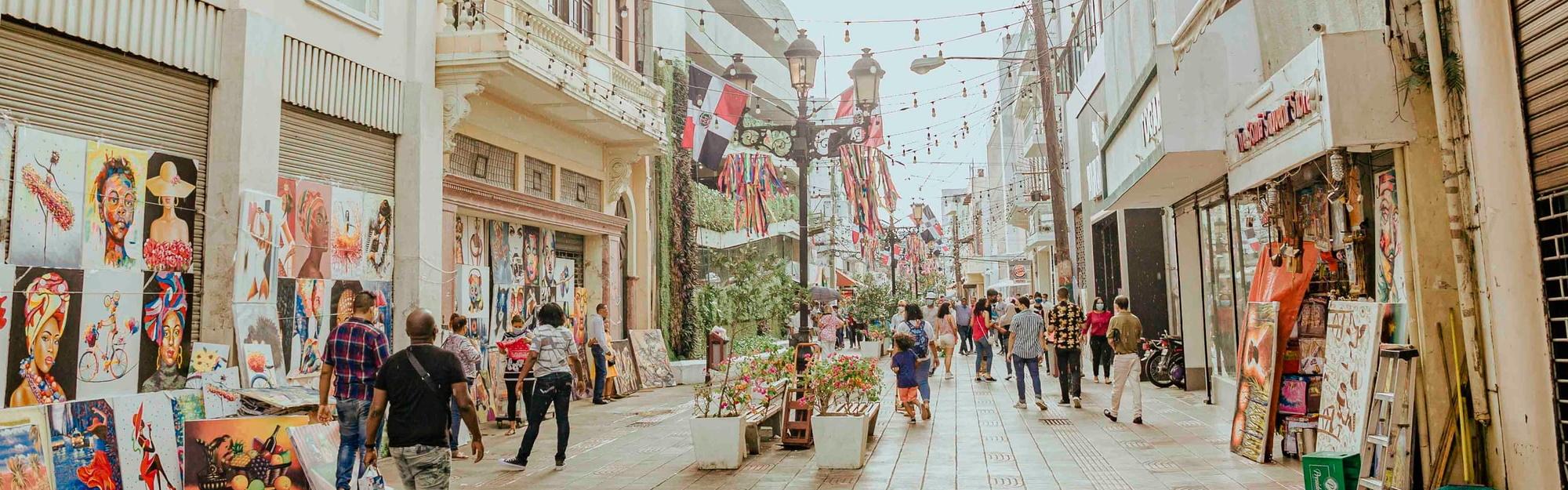
Santo Domingo offers a rich blend of historical and natural attractions that appeal to travellers of all kinds. Although the city sits on the Caribbean Sea, it isn't a beach destination. Urban beaches are located about 18 miles (30km) away, with Boca Chica being one of the closest. Instead, visitors should explore significant historic landmarks such as the Catedral Primada de América and Fortaleza Ozama, both located in the UNESCO-listed Colonial Zone.
Another must-see is the Columbus Lighthouse (Faro a Colón), a striking monument and museum that's said to contain Christopher Columbus's remains. While it offers an impressive visual and cultural experience, DNA evidence from elsewhere casts doubt on the identity of the remains.
A walk along the Malecón, Santo Domingo's oceanfront boulevard, gives a taste of the city's lively nightlife. With music, bars and local gatherings, it's considered one of the most vibrant evening spots in the capital.
The city is large enough to keep visitors entertained for several days, yet compact enough to allow its cultural highlights to be explored in a single day. For a change of scenery, it's worth heading to Los Tres Ojos National Park. There, visitors can descend into cave chambers to see three underground lakes, along with an optional fourth lagoon accessed by boat. It's a beautiful natural escape that complements the Colonial Zone's historical charm.
Whether visitors are drawn to history, architecture or nature, Santo Domingo has a diverse mix of experiences to enjoy at their own pace.
Cathedral of Santa Maria
The Cathedral of Santa María la Menor, also known as the Catedral Primada de América, is the oldest cathedral in the Western Hemisphere. Consecrated in 1541, this remarkable chur…
Cathedral of Santa Maria
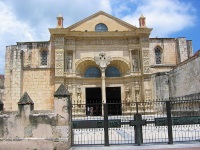
The Cathedral of Santa María la Menor, also known as the Catedral Primada de América, is the oldest cathedral in the Western Hemisphere. Consecrated in 1541, this remarkable church remains active today. Its striking architecture blends late Gothic and Renaissance styles, showcasing a golden coral limestone facade alongside a beautifully preserved Gothic interior.
Inside its walls, the cathedral has stood witness to centuries of history, including the dramatic capture of the city of Santo Domingo by Sir Francis Drake in 1586. Drake's forces seized the entire city and held it for ransom, marking one of the most turbulent moments in the cathedral's long past.
The cathedral also once housed the remains of Christopher Columbus before their final resting place was moved to the nearby Faro a Colón monument.
Colonial City
Colonial City, the historic heart of Santo Domingo, covers just about 0.41 square miles (1.06 km²) yet houses dozens of landmark sites within its walls. Visitors will find parks…
Colonial City
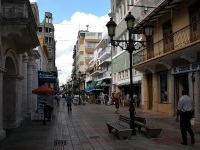
Colonial City, the historic heart of Santo Domingo, covers just about 0.41 square miles (1.06 km²) yet houses dozens of landmark sites within its walls. Visitors will find parks, forts, churches, plazas, statues, palaces, and monuments in close proximity. A walking tour of these fascinating attractions typically takes at least three hours, winding over cobbled streets once traversed by early colonial figures such as Christopher Columbus and later by Sir Francis Drake.
Calle Las Damas, often hailed as the oldest paved street in the Americas, remains a main artery through the historic zone. Among the must-see landmarks are the Casa del Cordón (believed to be one of the oldest European-style buildings in the Americas) and the Alcázar de Colón, the palace where Christopher Columbus's son Diego lived. Constructed between 1511 and 1514, the Alcázar is now a museum rich in period furnishings and art.
Columbus Lighthouse Monument
The Columbus Lighthouse, or Faro a Colón, is a massive cross-shaped monument on the eastern bank of the Ozama River. Inaugurated in 1992, it commemorates the 500th anniversary of …
Columbus Lighthouse Monument
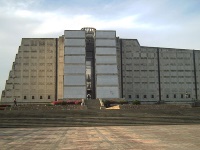
The Columbus Lighthouse, or Faro a Colón, is a massive cross-shaped monument on the eastern bank of the Ozama River. Inaugurated in 1992, it commemorates the 500th anniversary of Columbus's arrival and Santo Domingo's status as the oldest European city in the Americas. The structure was designed by Scottish architect Joseph Lea Gleave, who won a 1931 international competition for this design. Though construction was delayed for decades, his original plan was eventually realised in the 1980s. The monument stretches 680 feet and houses what are claimed to be Columbus's remains. At night, lights project a cross into the sky.
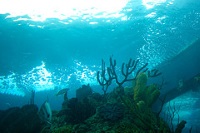
National Aquarium
The National Aquarium in Santo Domingo is one of the Caribbean's most comprehensive marine attractions, located about a 10 to 20 minute drive east of the Columbus Lighthouse in S…
National Aquarium
The National Aquarium in Santo Domingo is one of the Caribbean's most comprehensive marine attractions, located about a 10 to 20 minute drive east of the Columbus Lighthouse in Santo Domingo Este. Opened in 1990, it showcases more than 250 species (over 3,000 specimens) across 90 tanks and seven ponds. A highlight is the submerged viewing tunnel, which immerses visitors in a sea environment with sharks, rays, turtles, reef fish, seahorses, eels and more. Visitors can opt for guided or self-guided tours. Set beside the Caribbean Sea with open layout areas and garden terraces, the aquarium offers a lively and educational escape from the city.
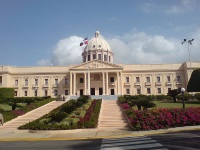
Plaza de la Cultura
Plaza de la Cultura is the cultural heart of Santo Domingo, featuring four major museums and the impressive Teatro Nacional, the country's premier performing arts venue. The neocla…
Plaza de la Cultura
Plaza de la Cultura is the cultural heart of Santo Domingo, featuring four major museums and the impressive Teatro Nacional, the country's premier performing arts venue. The neoclassical Palacio de Bellas Artes, home to the National Symphony Orchestra, also stands within the plaza. Nearby, the Palacio Nacional serves as the official residence of the Dominican Republic's president, while Boulevard 27 de Febrero, a pedestrian promenade along Avenida 27 de Febrero, showcases sculptures and artworks by prominent Dominican artists. Together, these sites create a vibrant cultural district in the city centre.
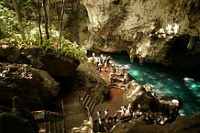
Los Tres Ojos National Park
Located on the east bank of the Ozama River, Los Tres Ojos (The Three Eyes) park offers a surreal experience for visitors. The site features a series of large natural limestone cav…
Los Tres Ojos National Park
Located on the east bank of the Ozama River, Los Tres Ojos (The Three Eyes) park offers a surreal experience for visitors. The site features a series of large natural limestone caves containing freshwater lagoons known as 'eyes'. These caves are adorned with impressive stalactites and stalagmites. Although local legend speaks of a bottomless lake, the lagoons are freshwater and relatively shallow. The caves were used by the pre-Columbian Taino Indians for religious ceremonies. Today, Los Tres Ojos is one of the most-visited natural attractions in the Dominican Republic.
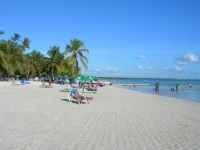
Boca Chica
The small seaside town of Boca Chica lies just east of Santo Domingo along the Avenida de las Americas and is a popular escape from city life. Its calm, clear turquoise waters, whi…
Boca Chica
The small seaside town of Boca Chica lies just east of Santo Domingo along the Avenida de las Americas and is a popular escape from city life. Its calm, clear turquoise waters, which are protected by a coral reef, make for superb swimming and snorkelling. Boca Chica is also known for its vibrant seafood restaurants, where visitors can enjoy fresh local dishes. Along with its pristine white sands and proximity to the capital city, Boca Chica is one of the most popular beaches in the Dominican Republic, especially on weekends and holidays. Boaters can anchor near Boca Chica's two islets, La Piedra and La Matica.