

Country guides
 Africa
Lesotho Travel Guide
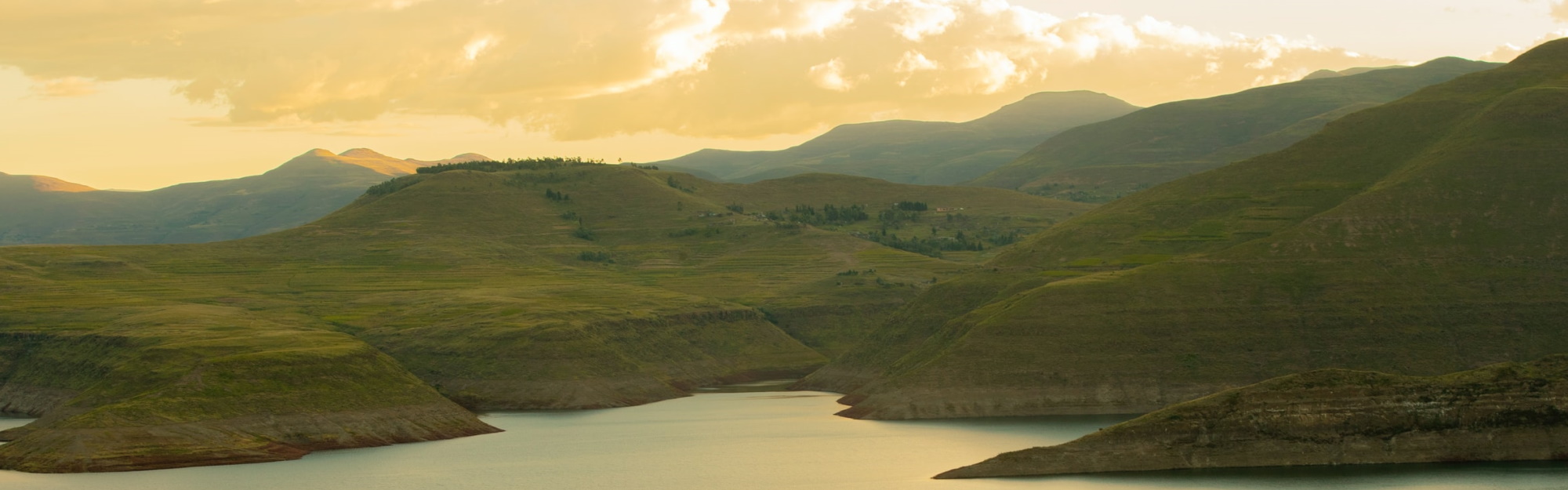
The mountainous Kingdom of Lesotho is small and roughly oval in shape, and is entirely surrounded by South Africa. Separated from its neighbour by the dramatic Drakensberg range and its western extension, the Maloti Mountains, Lesotho sits on a high plateau over 3,281 feet (1,000m) in elevation, with peaks rising above 10,000 feet (3,000m). Its highest point, Thabana Ntlenyana, reaches 11,423 feet (3,482m), making it the highest point in southern Africa.
Sani Pass is a breath-taking entry point into Lesotho from South Africa's Drakensberg National Park and serves as the gateway to the scenic 'Roof of Africa' route, linking the awe-inspiring landscapes of the two mountain ranges. Often called the 'Kingdom in the Sky', Lesotho's highlands are known for their majestic scenery, crisp air and the simple serenity of traditional Basotho life.
Pony trekking offers one of the finest ways to explore the highlands, with routes passing through remote Basotho villages nestled among grassy hills. Waterfalls drape cliffs in rainbow-tinted mist, and clear mountain streams weave through the rugged terrain. The region is also ideal for hiking, with solitude, trout-filled rivers, and the promise of a warm welcome in mountain hamlets.
The central highlands are home to Maletsunyane Falls, one of southern Africa's tallest single-drop waterfalls, near the town of Semonkong. Its name means 'Place of Smoke', as the 624-foot (190m) cascade crashes dramatically into a gorge, especially powerful during the summer rainy season.
From the Maloti Mountains, the land descends into the western lowlands, where most towns and about two-thirds of the population are located. Maseru, the capital, blends modernity and tradition: blanket-clad horsemen ride alongside urban traffic, while handcrafted goods line the sidewalks outside gleaming office buildings.
A visit to Lesotho reveals an African kingdom of rugged beauty and enduring culture; pristine, welcoming and remarkably untouched by mass tourism.