

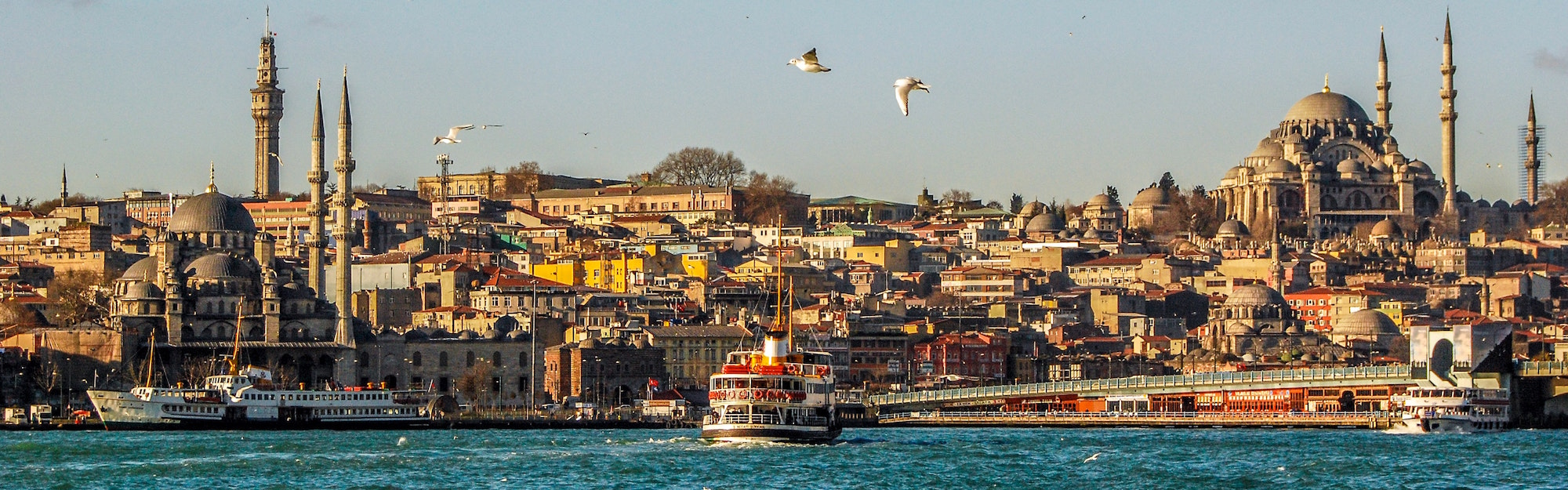

Things to do in Istanbul
Istanbul is a city steeped in history, where every corner unveils breath-taking architectural wonders that tell the story of its glorious past. A visit to this captivating destination is a journey through time, and a rendezvous with iconic landmarks that are as educational as they are awe-inspiring.
The Hagia Sophia is an absolute must-see; the stunning former cathedral and now a museum is renowned for its magnificent mosaics that span centuries of art and culture. Another unmissable sight is the Blue Mosque, with its towering minarets and intricately tiered domes making it a true testament to Ottoman grandeur.
Visitors should also stop at the Basilica Cistern, which is a magnificent, 6th century underground palace that's supported by hundreds of columns. For panoramic views of the city, travellers should head to the Galata Tower, where they'll be rewarded with a spectacular 360º vista of Istanbul's rich history.
The Land Walls of Istanbul, dating back to the 5th century, stand tall as a reminder of the city's incredible resistance during the 1453 Ottoman conquest. And, of course, a visit to the Grand Bazaar (the world's largest covered market) will immerse visitors in the vibrant colours, sounds and scents of a centuries-old shopping tradition.
Istanbul's attractions are not just sights; they are gateways to discovering the heart and soul of a city that has stood the test of time. Whether visitors are history buffs or simply in search of unforgettable beauty, this remarkable destination promises an experience they won't soon forget.

Hagia Sophia (Aya Sofya)
The massive Hagia Sophia is one of Istanbul's most popular attractions, famous for its impressive size, remarkable architecture, and beautiful mosaics and frescoes. It was commissi…
Hagia Sophia (Aya Sofya)
The massive Hagia Sophia is one of Istanbul's most popular attractions, famous for its impressive size, remarkable architecture, and beautiful mosaics and frescoes. It was commissioned as a cathedral in the 6th century and remained the most important church in Christianity for over 900 years. In the 15th century Mehmet II conquered the city and converted it into a mosque, adding the minarets and fountains. It functioned as such for the next 481 years until the founding of the secular Turkish Republic in 1934, when it was declared a museum. Hagia Sophia is one of the greatest Byzantine buildings in the world, and the vast interior, with its huge, soaring dome, is extraordinary. The interior contains different features from its time as a cathedral and then as a mosque, including incredible Byzantine mosaics, icons, and marble columns, a mihrab (niche indicating the direction of Mecca), and Islamic calligraphy inscriptions on the dome from the Ottoman period.
Website www.muze.gen.tr/muze-detay/ayasofya
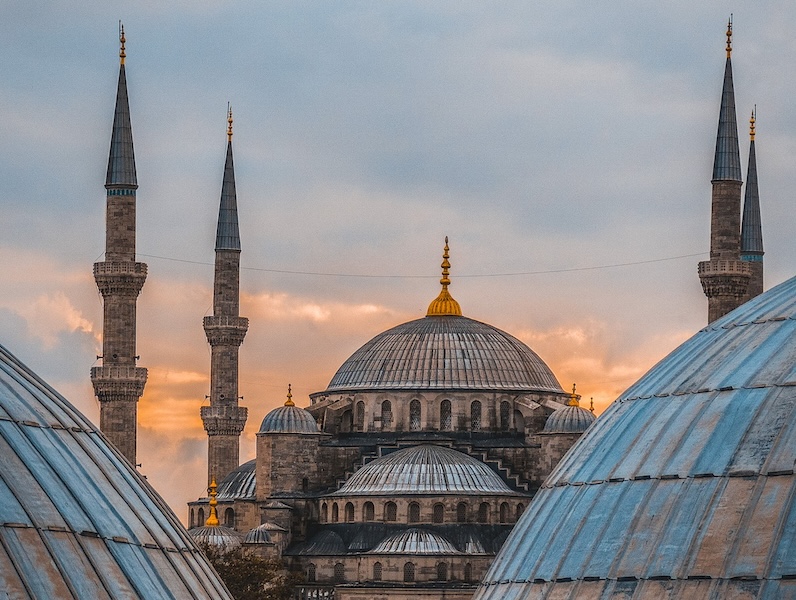
Blue Mosque (Sultan Ahmet Camii)
Commonly known as the Blue Mosque, the Sultan Ahmet Camii is one of the most striking structures on the Istanbul skyline. Constructed as an Islamic rival to the Hagia Sophia in 160…
Blue Mosque (Sultan Ahmet Camii)
Commonly known as the Blue Mosque, the Sultan Ahmet Camii is one of the most striking structures on the Istanbul skyline. Constructed as an Islamic rival to the Hagia Sophia in 1609, its tiers of magnificent domes and six graceful minarets are immediately distinguishable. It's one of the finest examples of Ottoman architecture and is still used by hundreds of worshippers. The interior is splendidly decorated with thousands of blue and white Iznik tiles embellished with traditional Ottoman flower patterns, and it's this special feature that gives the mosque its name. Its design of successively descending smaller domes, soaring columns, and 260 stained glass windows leaves a lasting impression of graceful accord and open space. At the back of the mosque is a Carpet and Kilim Museum exhibiting antiques from all over Turkey.
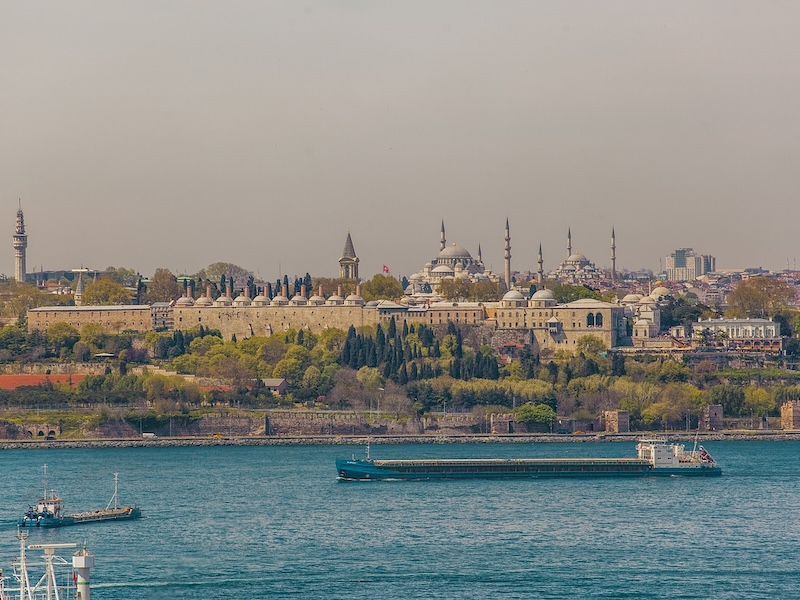
Topkapi Palace Museum
Built by Mehmet the Conqueror as a sultan's palace, the Topkapi Sarayi consists of a collection of buildings arranged around several interconnecting courtyards. Situated on one of …
Topkapi Palace Museum
Built by Mehmet the Conqueror as a sultan's palace, the Topkapi Sarayi consists of a collection of buildings arranged around several interconnecting courtyards. Situated on one of the seven hills of Istanbul with uninterrupted views over the Bosphorus River and the Golden Horn, it was the seat of the Ottoman Empire for almost four centuries. Home to nearly 3000 people, it served as a royal residence, harem, administration building, and military barracks. One of the most popular sections is the harem, once the quarters of about 300 women who were the sultans' wives and concubines, and their children. Visitors can view the apartments, halls, and terraces of the harem, and see the lavish royal bedchamber and imperial hall. No expense was spared in decorating the palace and its exquisitely designed rooms, intricately detailed fountains, and splendid treasury housing one of the greatest collections of treasure in the world. It affords insight into the opulent lifestyle of the sultans of the Ottoman Empire.
Website www.muze.gen.tr/muze-detay/topkapi
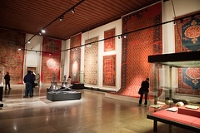
Turkish and Islamic Art Museum
The grand 16th century palace of the sultan's Grand Vizier, Ibrahim Pasa, today houses the Turkish and Islamic Art Museum, containing what many consider to be the greatest collecti…
Turkish and Islamic Art Museum
The grand 16th century palace of the sultan's Grand Vizier, Ibrahim Pasa, today houses the Turkish and Islamic Art Museum, containing what many consider to be the greatest collection of Islamic artefacts in the world. The palace itself was the finest private residence ever built in the Ottoman Empire. From its supreme position overlooking the Hippodrome, the sultan could enjoy excellent views of the celebrations in the square below. The museum is well laid out and contains more than 40,000 examples of Selcuk, Mamluk, and Ottoman Turkish art, including ceramics, Koran cases, calligraphy, textiles, metalwork, and illuminated manuscripts. Its antique carpet exhibit is renowned, with the carpets, kilims, and prayer rugs forming one of the richest and oldest collections in the world.
Website www.muze.gen.tr/muze-detay/tiem
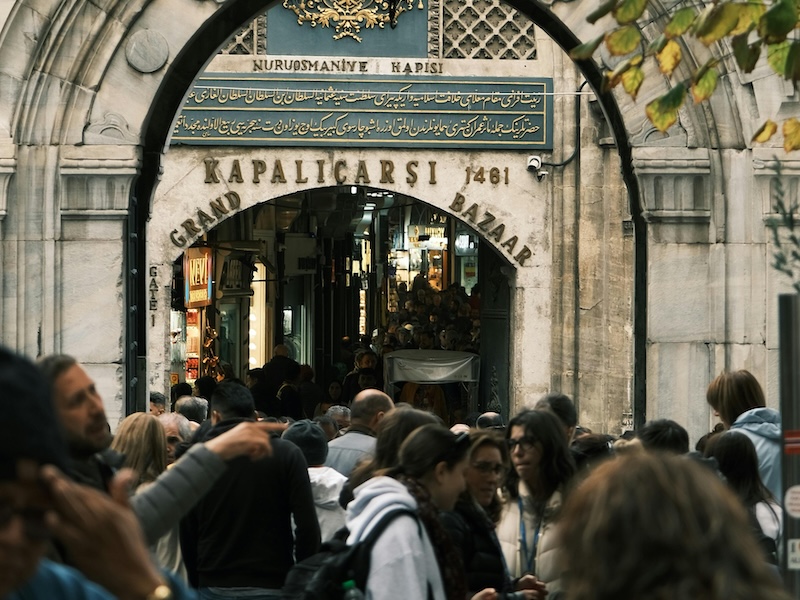
Grand Bazaar (Kapalicarsi)
The oldest and biggest enclosed bazaar in the world, Kapalicarsi is one of the most enticing and mesmerising attractions in Istanbul. Also known as the Grand Bazaar, it consists of…
Grand Bazaar (Kapalicarsi)
The oldest and biggest enclosed bazaar in the world, Kapalicarsi is one of the most enticing and mesmerising attractions in Istanbul. Also known as the Grand Bazaar, it consists of a vast labyrinth of twisting streets crammed with more than 4,000 shops, teahouses, Turkish baths, mosques, storehouses, and fountains. It's a fascinating experience to wander around the alleyways, looking at and bargaining for an array of goods and services. Here visitors can find almost anything, from meerschaum pipes, carpets, jewellery, and Turkish delight, to textiles, spices, clothing, and hand-painted ceramics. Protracted bargaining over a cup of tea is an important institution. Built during the rule of Sultan Mehmet the Conqueror in 1461, the bazaar grew by covering an increasingly large area of shops and streets with roofs, arches, and domes. Eventually it became the centre of trading during the Ottoman Empire. Caravans of silk traders traditionally stayed here and rested their camels while selling their merchandise, and many of these caravanserais still exist as storehouses today.
Website www.kapalicarsi.com.tr

Sunken Palace
Also known as the Underground Cistern or Yerebatan Saray, this eerie cavern was built by Constantine the Great around 532 AD and is supported by 336 columns below ground. Once a lo…
Sunken Palace
Also known as the Underground Cistern or Yerebatan Saray, this eerie cavern was built by Constantine the Great around 532 AD and is supported by 336 columns below ground. Once a location for the James Bond film, , today the cavern sees tourists crossing over two acres of 12-inch deep water on wooden walkways, taking in the occasional art exhibit or intricate designs on the columns themselves. There's a pleasant little cafe above where visitors can relax with some tea and let their eyes readjust to the daylight.

Galata Tower
Galata Tower (Galata Kulesi) is a medieval stone tower located in the Galata district of Istanbul, situated just north of the Golden Horn inlet, which connects to the Bosphorus. Bu…
Galata Tower
Galata Tower (Galata Kulesi) is a medieval stone tower located in the Galata district of Istanbul, situated just north of the Golden Horn inlet, which connects to the Bosphorus. Built by the Genoese in 1348 as part of the fortifications for the Genoese colony of Galata, the tower originally served as a watchtower and a defensive structure.
Today, the Galata Tower is one of Istanbul's most iconic landmarks, offering spectacular panoramic views of the city, including the historic peninsula, the old town (Sultanahmet), and the Bosphorus Strait. From the observation deck at the top, visitors can enjoy sweeping vistas of Istanbul's famous sites, such as Hagia Sophia, the Blue Mosque and Topkapi Palace, as well as the city's modern skyline.
The tower's distinct cone-shaped roof and cylindrical stone structure dominate the surrounding area, making it an easily recognisable feature of the city's skyline. Visitors can take an elevator to the top for breath-taking views or, for a more traditional experience, climb the spiral staircase to the observation platform.
Inside the tower, there's a restaurant and a café where guests can enjoy meals and drinks while taking in the stunning views. The tower is also a popular spot for tourists, especially in the evenings, when the city lights up. Although the Galata Tower doesn't host belly dancing or nightclub performances, there are plenty of entertainment options nearby in the bustling Karakoy district, which is known for its lively cafes, bars and cultural venues.
For history buffs, the tower houses a small museum that offers insights into its rich history and its role in Istanbul's past. The Galata Tower is also conveniently located near the vibrant Istiklal Avenue and Taksim Square, making it easy for visitors to explore other parts of the city.
Website www.muze.gen.tr/muze-detay/galatakulesi

Dolmabahce Palace
The Dolmabahce Palace was home to six Sultans from 1856, when it was first inhabited, up until the abolition of the Caliphate in 1924. The last royal to live here was Caliph Abdulm…
Dolmabahce Palace
The Dolmabahce Palace was home to six Sultans from 1856, when it was first inhabited, up until the abolition of the Caliphate in 1924. The last royal to live here was Caliph Abdulmecid Efendi, before a law in 1924 transferred the ownership of the palace to the national heritage of the new Turkish Republic. Mustafa Kemal Ataturk, the founder and first President of the Republic of Turkey, used the palace as a presidential residence during the summers and enacted some of his most important works here. Ataturk spent the last days of his medical treatment in this palace, where he died in 1938. The palace has an ostentatious interior of crystal chandeliers, while the exterior of the palace has a vast and beautiful garden.
Hippodrome
The Hippodrome of Constantinople was constructed between the early 3rd and 4th centuries AD, initially under Emperor Septimius Severus around 203 AD, and expanded during the reign …
Hippodrome
The Hippodrome of Constantinople was constructed between the early 3rd and 4th centuries AD, initially under Emperor Septimius Severus around 203 AD, and expanded during the reign of Constantine the Great. This grand stadium was primarily used for chariot races, horse races and public spectacles, with seating that could accommodate between 30,000 and 60,000 spectators.
Today, the site of the former Hippodrome is a lively public square, Sultanahmet Square, in Istanbul. While most of the original structure has disappeared, remnants of its past, such as several impressive columns, still stand. Notable landmarks in the area include the Obelisk of Thutmose III (an ancient Egyptian relic), the Serpentine Column, the Constantine Column, and the Fountain of Wilhelm II, all contributing to the historical charm of the space.
The nearby Basilica Cistern, another marvel of Byzantine engineering, is also worth a visit. The area is now a popular public park, and visitors can enjoy free wireless internet while taking in the historical surroundings.