

Country guides
 Asia
Asia
Kyrgyzstan Travel Guide
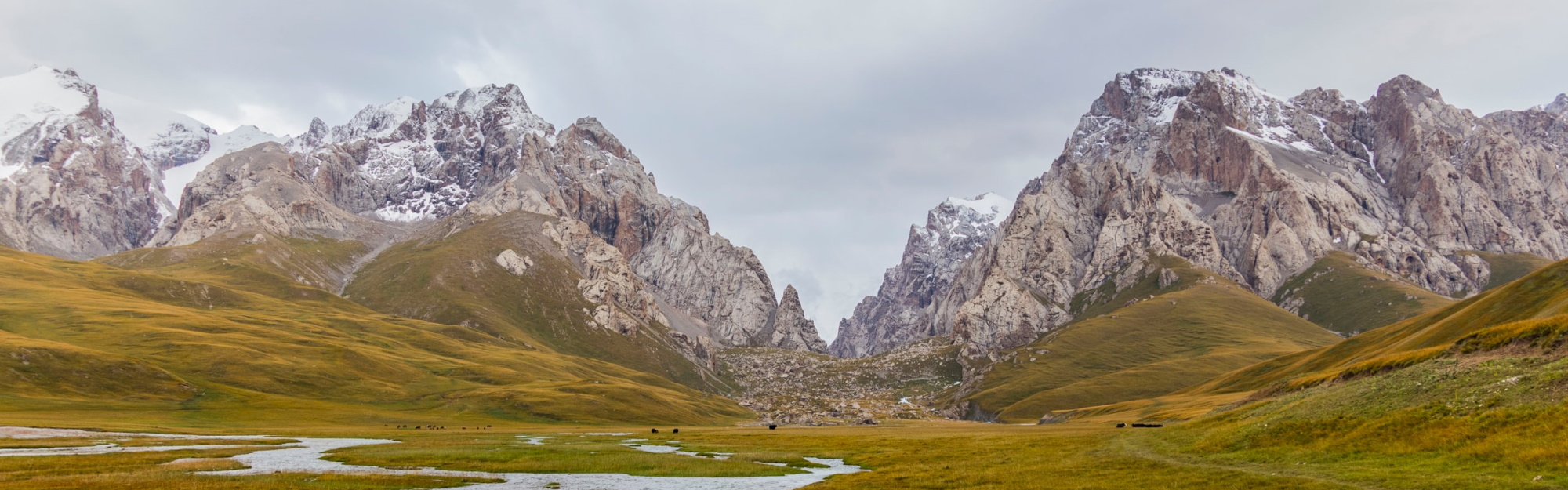
Surrounded by the rugged Kyrgyz Ala-Too Range, the Kyrgyz Republic in Central Asia is an adventurer's paradise. This landlocked destination boasts some of the world's highest mountains, with dozens of peaks soaring above 5,000 metres (16,404 feet), including legendary summits such as Jengish Chokusu and Khan Tengri. These dramatic landscapes have earned Kyrgyzstan the nickname, 'Switzerland of Central Asia'.
The remote and challenging terrain has long attracted mountaineers, though much of the region remained inaccessible to foreigners during the Soviet era. Since independence in 1991, however, Kyrgyzstan has welcomed trekkers, climbers and explorers eager to experience its untouched beauty.
One of the best places to begin an alpine adventure is Ala-Archa National Park, just 22 miles (35km) from the capital, Bishkek. Home to over 20 glaciers and approximately 50 peaks, the park offers excellent opportunities for hiking, climbing, horse trekking and even skiing, all amid dramatic high-mountain scenery.
Beyond the peaks, Kyrgyzstan's natural wonders include some remarkable lakes. Lake Issyk-Kul, at 113 miles (182km) long and 37 miles (60km) wide, is the second-largest alpine lake in the world after Titicaca. It's warm, mineral-rich waters never freeze, despite its altitude of over 1,600 metres. Other highland lakes, such as the serene Song-Kul and the striking red rock surroundings of Jeti Oguz, offer more secluded retreats, where thermal springs and panoramic vistas await.
The Arslanbob region, located in the Jalal-Abad province, has the world's largest natural walnut forest, an area steeped in legend and traditional Kyrgyz culture. It's a popular destination for hiking and cultural tours.
Among this abundance of natural splendour lies Bishkek, the capital, known for its leafy avenues, wide boulevards and abundance of public parks. It's frequently cited as one of the greenest cities in Central Asia. In the country's south, the ancient city of Osh, near the Uzbekistan border, claims a history of over 3,000 years. A once-vital Silk Road hub, Osh is still famous today for its bustling market, which is one of the oldest and largest in the region.
The Kyrgyz, the country's largest ethnic group, are traditionally nomadic herders, with roots tracing back to Siberia. Their seasonal lifestyle persists today, with many families moving to high mountain pastures, or jailoos, during summer months. There, they live in traditional yurts (round felt tents) while herding sheep, yaks and horses across the open steppes.
Horse culture is central to Kyrgyz identity. Traditional games, such as kok boru (a form of horseback polo with a goat carcass), feature prominently at festivals and regional competitions. Hospitality remains a cherished custom in Kyrgyz society, and travellers are often warmly welcomed, sometimes with a cup of kumis, the national drink made from fermented mare's milk (though its taste is definitely an acquired one).