

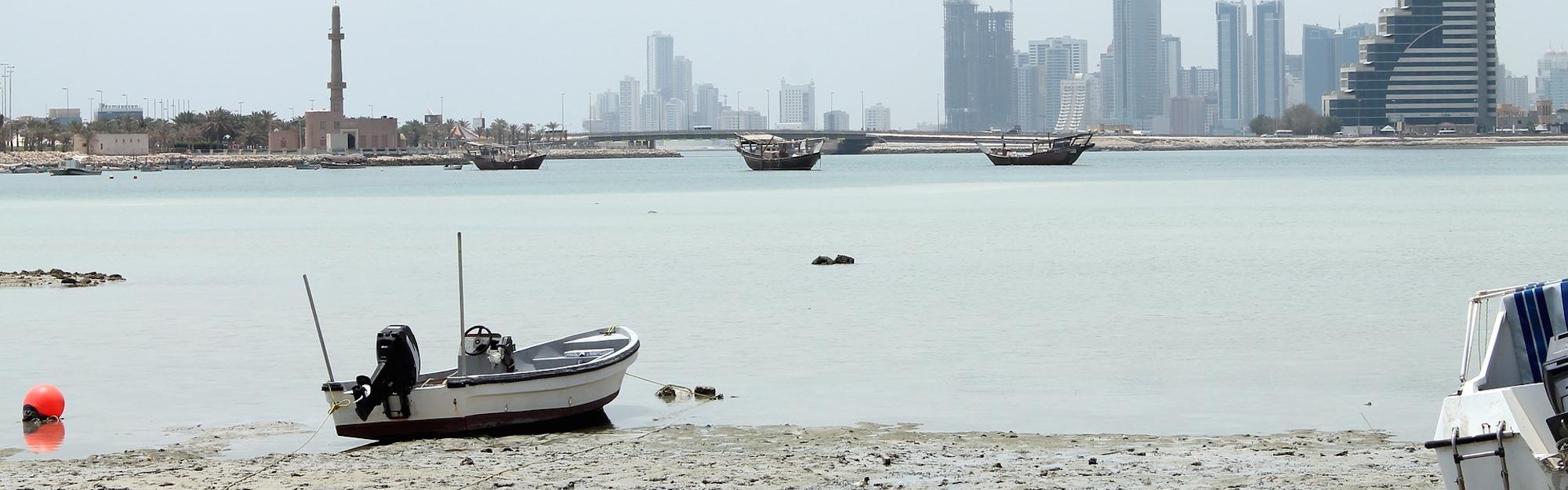

Bahrain travel info
Electricity
Bahrain uses a 230-volt, 50Hz electrical system, and power outlets accept UK-style Type G three-pin plugs.
Language
While Arabic is the official language of Bahrain, English is widely spoken and is the primary language used in business and daily transactions.
Money
The official currency of Bahrain is the Bahraini dinar (BHD), which is pegged to the U.S. dollar at a rate of about 1 USD to 0.376-0.377 BHD. Visitors can exchange money at bureaux de change, commercial banks (especially in Manama), or money changers in the traditional souks.
ATMs are widely available in larger towns and cities, making it easy to withdraw cash when needed. Credit cards such as Visa and Mastercard are accepted in most hotels, restaurants and shops, but it's a good idea to carry some cash for smaller stores and local markets.
Many Bahraini banks support Apple Pay, so if travellers have an Apple device, they can use it for contactless payments at numerous locations. However, Google Pay is not widely supported for linking local bank cards, so Android users should check with their bank before relying on it. To stay on the safe side, it's best to have a physical card or some cash handy, especially when exploring less touristy areas or smaller businesses.
Tipping
Many restaurants and hotel dining venues in Bahrain include a service charge of around 10 to 15 percent on the bill, especially in tourist areas. If no service charge is added, a tip of 10 percent is appreciated but not required. Taxi drivers don't always expect a tip, but rounding up the fare or adding about 10 percent for good service is common. Porters usually appreciate a small tip of around 100 fils per bag.
Health
Travellers arriving from countries where yellow fever is present (or who have transited through those countries) must show proof of vaccination. A hepatitis A vaccination is also recommended before travel.
Medical facilities in Bahrain are modern and reliable, especially in major cities such as Manama. However, treatment must be paid for, so it's worth having travel health insurance. Pharmacies are easy to find and generally well stocked with both prescription and over-the-counter medications.
Tap water is officially considered safe to drink, but many visitors prefer bottled water, which is widely available throughout the country.
Safety
Bahrain has a relatively low crime rate, and most visits are trouble-free. Like many countries in the region, there's a general risk of terrorism, and travellers are advised to stay alert, especially in busy public areas and near Western interests. While protests are rare, it's best to avoid large gatherings or demonstrations if they occur.
Around 4,000 British nationals live in Bahrain, and thousands more visit each year without incident. As with any international trip, staying informed and exercising common sense will help ensure a safe and enjoyable stay.
Local customs
Bahrain is one of the more liberal Gulf countries, but it remains an Islamic nation with conservative values. Visitors are expected to dress modestly and behave respectfully in public; revealing clothing and public displays of affection may cause offence.
Same-sex relationships between consenting adults over 21 are not explicitly illegal in private, but public expressions of LGBTQ+ identity can lead to legal issues under public decency laws. Discretion is strongly advised.
Religious and cultural customs should be respected, particularly during religious festivals. During the holy month of Ramadan, it's considered both disrespectful and legally punishable to eat, drink or smoke in public during daylight hours, even for non-Muslims.
Doing business
Bahrain is more relaxed than some of its Gulf neighbours, but business culture still values tradition. Women should dress modestly, with covered shoulders and knees, and men usually wear suits and ties, though traditional dress is also common.
Personal connections matter, so having an introduction from a mutual contact can go a long way. Meetings usually begin with some friendly conversation, and it's best to be patient, as trust takes time and rushing things isn't encouraged.
Being on time is appreciated. Business cards are commonly exchanged at the start of a meeting; offering one with both hands and including an Arabic translation shows good manners. Using formal titles is a sign of respect.
The working week runs Sunday to Thursday. Government offices open early and finish by early afternoon, while private businesses tend to follow regular office hours. During Ramadan, visitors should expect shorter hours and a shift to later meetings.
Duty free
Travellers to Bahrain aged 18 or over may bring in the following items duty-free: up to 400 cigarettes, 50 cigars or 250 grams of tobacco; up to 8 ounces (approximately 237 ml) of perfume; 1 litre of alcoholic liquor and 6 cans of beer (for non-Muslim passengers only); and gifts valued at up to BD 250.
Communications
The international dialling code for Bahrain is +973. Since international roaming charges can be expensive, many travellers find it more affordable to purchase a local prepaid SIM card upon arrival. SIMs are available at the airport and in mobile shops across the country. Internet access is widely available in larger hotels in Manama, and many cafés and public areas also offer WiFi.
Passport & Visa
All travellers to Bahrain require a visa, except citizens of the Gulf Cooperation Council (GCC): Kuwait, Oman, Qatar, Saudi Arabia, and the United Arab Emirates. Eligible nationalities can obtain a visa on arrival or apply in advance through the official eVisa website. Not all nationalities are eligible for a visa on arrival, so travellers should check their eligibility in advance. A passport valid for the duration of stay is officially required, though a validity of at least six months is strongly recommended. Visitors may also be required to show a return or onward ticket, proof of sufficient funds, and the address of stay in Bahrain.
Entry requirements
US citizens require a passport that is valid for at least six months beyond the date of entry. The Government of Bahrain offers visas on arrival and eVisas for eligible travellers.
UK citizens require a passport that is valid for at least six months beyond the date of entry. The Government of Bahrain offers visas on arrival and eVisas for eligible travellers.
Canadian citizens require a passport that is valid for at least six months beyond the date of entry. The Government of Bahrain offers eVisas, and visa on arrival may be available, though travellers are advised to check eligibility in advance.
Australian citizens require a passport that is valid for at least six months beyond the date of entry. The Government of Bahrain offers eVisas, and visa on arrival may be available, though travellers are advised to confirm eligibility prior to travel.
South African citizens require a passport that is valid for at least six months beyond the date of entry. Visa on arrival is available only if the traveller holds a valid visa for the UK, USA, Schengen countries, or certain GCC (Gulf Cooperation Council) states. Otherwise, a visa must be obtained in advance or via the eVisa system.
Irish citizens require a passport that is valid for at least six months beyond the date of entry. The Government of Bahrain offers eVisas, and visa on arrival may be available, though travellers should verify eligibility before travelling.
New Zealand citizens require a passport that is valid for at least six months beyond the date of entry. The Government of Bahrain offers eVisas, and visa on arrival may be available, subject to eligibility.
Useful contacts
Bahrain Tourist Office, Manama: www.btea.bh.
999 (General Emergencies)